Best AI Image Generators 2026 Tier List
I ranked 21 AI image generators from S to D, including GPT Image, Nano Banana, Midjourney, FLUX and imgskit. See why each landed where it did.
Tier Maker Pro 7 min read
This post is my personal ranking of 21 AI image generators, sorted from S to D. It is based on what actually matters when you sit down to make an image: how good it looks, how well it follows your prompt, whether text in the image is readable, how easy the tool is to use, and whether you can use the results commercially.
Want to make your own version? Open the tier list template here and drag the tools around. If you disagree with my ranking, I really want to see yours. Drop it in the comments.
Why 2026 Feels Different for AI Image Tools
Image generation changed a lot this year. A few things keep coming up in searches and discussions:
- GPT Image 2 arrived in April 2026 and pushed text rendering and instruction-following much further.
- Nano Banana Pro and Nano Banana 2 from Google made conversational editing and character consistency feel normal.
- Midjourney v7 is still the one people mention first when they want "pretty."
- Commercial safety became a real question, which is why tools like Adobe Firefly keep getting attention.
- Many reviewers now agree there is no single best tool. The right pick depends on what you are making.
That last point is exactly why a tier list is useful. It shows the overall picture, and you can still pick the tool that fits your own job.
Quick Summary: The Full Tier List
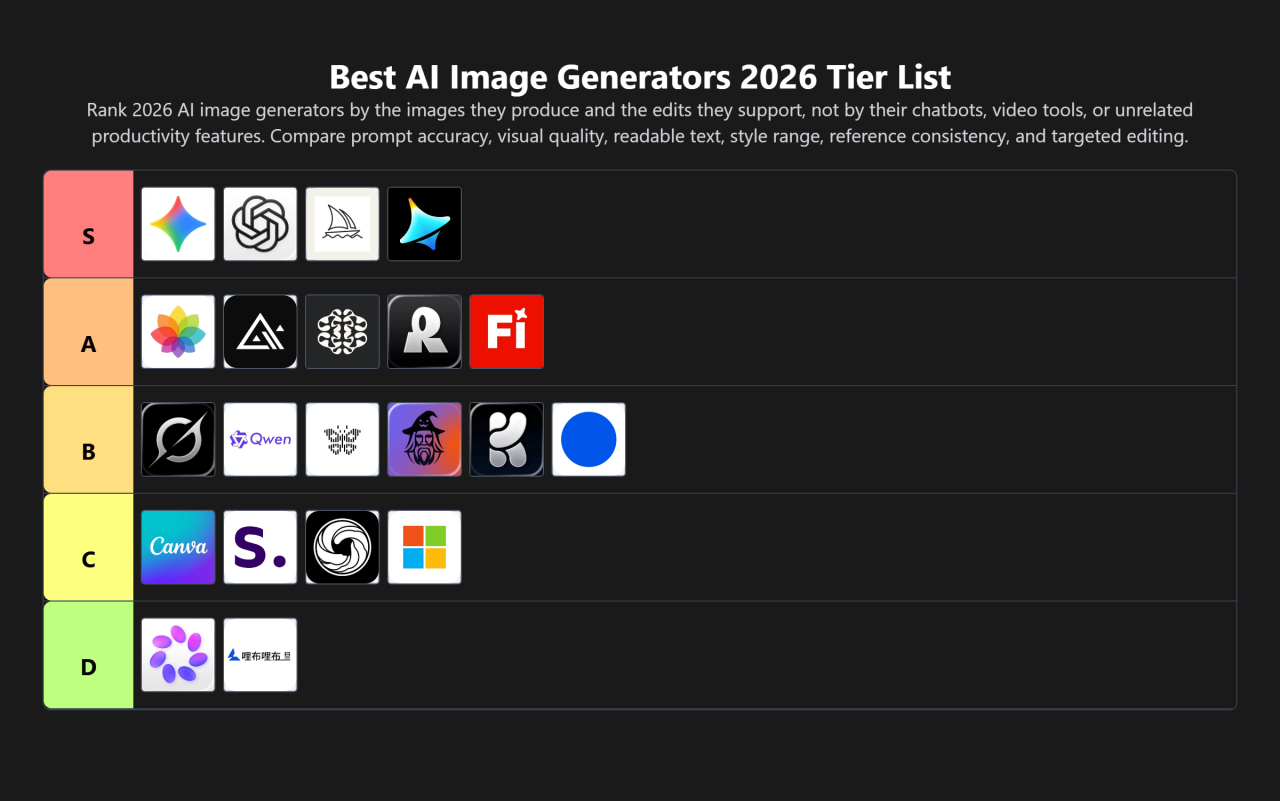
- S Tier: Nano Banana (Gemini), ChatGPT Images (GPT Image), Midjourney, Seedream (Dreamina)
- A Tier: imgskit, FLUX, Ideogram, Recraft, Adobe Firefly
- B Tier: Grok Imagine, Qwen-Image, Reve, Leonardo AI, Krea, Hunyuan Image
- C Tier: Canva AI, Stable Diffusion, SeaArt, Microsoft MAI-Image
- D Tier: Meta AI (Muse Image), LiblibAI
Now let me explain every placement.
S Tier: The Best of the Best
These four are the tools I would recommend to almost anyone, no matter what they are creating.
Nano Banana (Gemini)
This is the one that surprised me most. You can describe an image, then keep talking to fix it: "make the lighting warmer," "change her jacket to red." It remembers your character and your scene. If you have ever lost a good image because one tweak ruined everything, you will love this.
ChatGPT Images (GPT Image)
The best all-rounder for everyday people. It reads long prompts well, and text inside images (posters, menus, mockups) finally looks right. It also lives inside a chat you probably already use, so there is nothing new to learn.
Midjourney
When I want an image to feel like art, I still go here. The style, lighting, and mood are hard to beat. The trade-off is that it is less "just type and go" than the chat-based tools, and it asks for a paid plan.
Seedream (Dreamina)
Fast, sharp, and very good with detailed scenes and portraits. It earns its S spot by giving high quality without making you fight the prompt.
A Tier: Strong, With Clear Strengths
imgskit
I put imgskit at the top of A tier. It is simple to start with, quick to produce results, and does not make you feel like you need a manual just to get a decent image. For people who want to open a tool and create right away, that matters more than a long feature list. It is not at the very top of the whole list yet, but it is the first tool I would try next to the S tier.
FLUX
Excellent photorealism, especially for skin, materials, and natural light. It is a favorite for people who want images that look like real photos.
Ideogram
If your image needs readable words, such as logos, covers, or posters, Ideogram is one of the most reliable options.
Recraft
Great for design-style work: icons, illustrations, vector-like graphics, and brand visuals. It feels built for designers, not just for prompt players.
Adobe Firefly
The commercial-safe choice. Results can look more careful than flashy, but if you are making images for clients or a business, peace of mind counts for a lot. It also fits neatly into Photoshop and Illustrator.
B Tier: Good, But Not First Choice
- Grok Imagine: Fun and fast, and handy if you already live on X, but less consistent.
- Qwen-Image: Solid quality and good multilingual text, still catching up in polish.
- Reve: Impressive prompt adherence, though the ecosystem is smaller.
- Leonardo AI: Good style control for game art and concepts, but the competition has caught up.
- Krea: Nice real-time and creative tools, better for experimenting than for finished work.
- Hunyuan Image: Capable model with strong potential, but less friendly for casual users.
C Tier: Useful, With Compromises
- Canva AI: Great because it sits inside Canva, but the images alone are only average.
- Stable Diffusion: Powerful and open, but you need time and setup to get great results.
- SeaArt: Lots of community models, though quality and ease of use vary widely.
- Microsoft MAI-Image: A promising newcomer that still feels early.
D Tier: Behind for Now
- Meta AI (Muse Image): Easy to reach, but results and control lag behind the top tools.
- LiblibAI: Strong in its own community, but it is harder to recommend for a general English-speaking audience.
D tier does not mean "bad." It means these were not my first picks for the kind of work I do. Your list might look totally different, and that is the fun of it.
Two Questions I Keep Asking Myself
Question 1: Why is imgskit at the top of A tier and not in S?
Answer: Because S tier is for tools that win in almost every category. imgskit wins on simplicity and speed, which are exactly the things beginners care about, but the S tools still lead on raw quality, editing depth, and ecosystem. Think of imgskit as the best "start here" option just below the giants. If your list says otherwise, move it up and tell me why.
Question 2: If there is no single best tool, why make a tier list at all?
Answer: Because a tier list is a starting point, not a verdict. It saves you from testing 21 tools blindly. Pick one from S for general use, one from A for your specific need (text, photos, design), and you are covered.
FAQ: Best AI Image Generators in 2026
What is the best AI image generator in 2026?
For most people, Nano Banana (Gemini) and ChatGPT Images are the easiest high-quality choices. Midjourney is best when you want artistic style.
Which AI image generator is best for text in images?
ChatGPT Images and Ideogram are the strongest picks. Both handle posters, logos, and short headlines far better than older tools.
Which one is best for realistic photos?
FLUX and Nano Banana lead here. Midjourney also produces very realistic results with the right prompts.
Are there free AI image generators worth using?
Yes. Many tools in this list offer free tiers or trials, though limits change often. Check each pricing page before you commit.
Can I use AI-generated images commercially?
It depends on the tool and your plan. Adobe Firefly is known for its commercial-safe approach, but always read the license for any tool you use.
Can I make my own AI image generator tier list?
Absolutely. I made a template you can use. Try it here, rearrange the tools, and share your version.
Final Thoughts
AI image tools move fast, and this list will change by next year, maybe by next month. For now, my advice is simple: start with an S tier tool, add one A tier tool that fits your needs, and ignore the hype.
Now it is your turn. Where would you put each tool? Make your own tier list with the template and share it in the comments. I am curious who you would move to S and who you would send to D.
This ranking is my personal opinion and reflects the tools as of late 2026.