A Guide to Some of the Most Interesting Museums in the United States
The United States has no shortage of world-class museums. What makes them interesting isn’t just the size of the collections, but how different each city feels.
TierSmith 4 min read
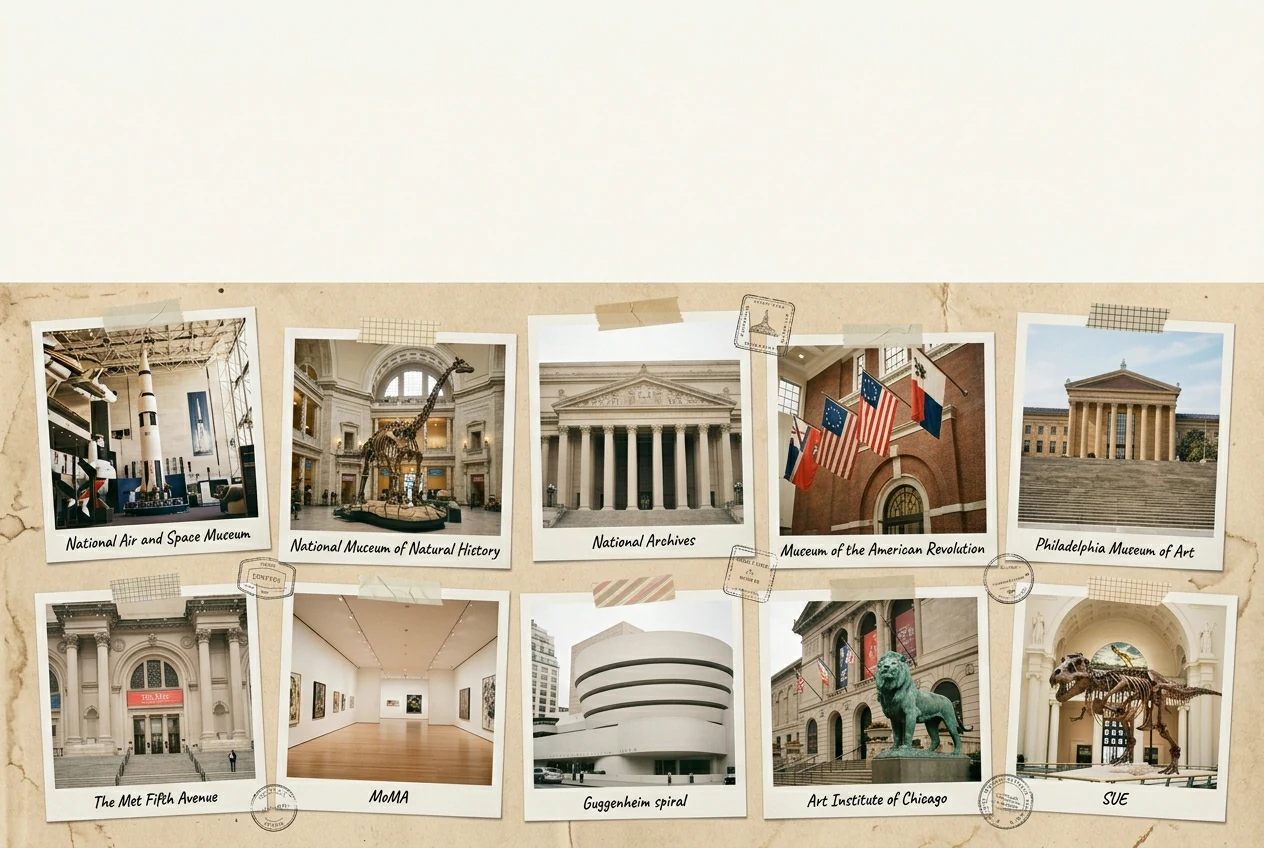
In Washington DC, museums are closely tied to history and national identity. In New York, they lean heavily toward global art and creative expression. Chicago blends both art and science in a very grounded way. And Philadelphia adds a strong sense of storytelling and heritage.
If you’re planning a trip across major US cities, these are some museums that tend to stand out—not necessarily because they are “the best,” but because they each offer a very distinct experience.
Washington DC — Museums Built Around History
Washington DC feels like a city designed around museums. Many of them are part of the Smithsonian Institution, which also means they are free to enter.
The National Air and Space Museum is often the first stop for visitors. It’s one of those places where you don’t need to be a space enthusiast to appreciate it. Seeing real spacecraft, early aircraft, and lunar mission artifacts up close tends to change how people think about aviation history.
Not far away, the National Museum of Natural History offers a very different experience. It’s more immersive and visual, with dinosaur fossils, ocean exhibits, and one of the most visited gem collections in the world.
The National Archives Museum is quieter but arguably more symbolic. It’s where you can see original documents like the Declaration of Independence and the US Constitution. The atmosphere is subdued, and people tend to spend more time than expected just standing in front of the displays.
New York City — A Concentration of Global Art
New York’s museums feel less like national institutions and more like global cultural hubs.
The Metropolitan Museum of Art (The Met) is massive in both scale and ambition. It covers thousands of years of art history, from ancient civilizations to European masterpieces and contemporary works. It’s not a place you “finish” in one visit—it’s more something you experience in sections.
The Museum of Modern Art (MoMA) offers a very different rhythm. It focuses on modern and contemporary art, including some of the most recognizable works in the world. Even for casual visitors, it tends to feel familiar because many pieces appear in textbooks and media.
The Guggenheim Museum stands out immediately because of its architecture. Designed by Frank Lloyd Wright, the building itself is part of the experience. Visitors move through a continuous spiral space, which changes how the art is perceived compared to traditional gallery layouts.
Philadelphia — History Told Through Objects
Philadelphia’s museums feel more narrative-driven compared to other cities.
The Museum of the American Revolution is particularly effective at this. Instead of focusing only on major historical figures, it also includes personal stories and everyday objects from the Revolutionary War period, which makes the experience feel more grounded.
The Philadelphia Museum of Art is better known for its collection and its location. While it houses a strong range of European and American works, many visitors also recognize it from its famous front steps, which have become part of pop culture.
Chicago — Where Art and Science Meet
Chicago’s museums are often appreciated for their balance between visual impact and educational depth.
The Art Institute of Chicago is best known for its Impressionist and Post-Impressionist collections. Works like American Gothic are among its highlights, but the museum also has a strong overall range that rewards slow exploration.
The Field Museum is one of the most well-known natural history museums in the world. Its most famous resident is “SUE,” a nearly complete Tyrannosaurus rex skeleton that immediately draws attention upon entry. Beyond dinosaurs, the museum also covers anthropology, ancient cultures, and biodiversity.
Final Thoughts
What stands out about museums in the United States is not a single unified style, but rather their diversity.
Some focus on national history, others on global art, and others on scientific discovery or architecture itself. Together, they reflect a country where museums are not just storage spaces for objects, but active ways of telling different kinds of stories.
For travelers, the experience usually depends less on checking off “the best museums” and more on which kind of story you want to step into。