12 Chinese Winter Comfort Foods You Need to Try This Season
From viral malatang to classic hotpot, explore 12 Chinese winter comfort foods trending right now — their origins, appeal, and how to enjoy them at home.
Charlotte 7 min read
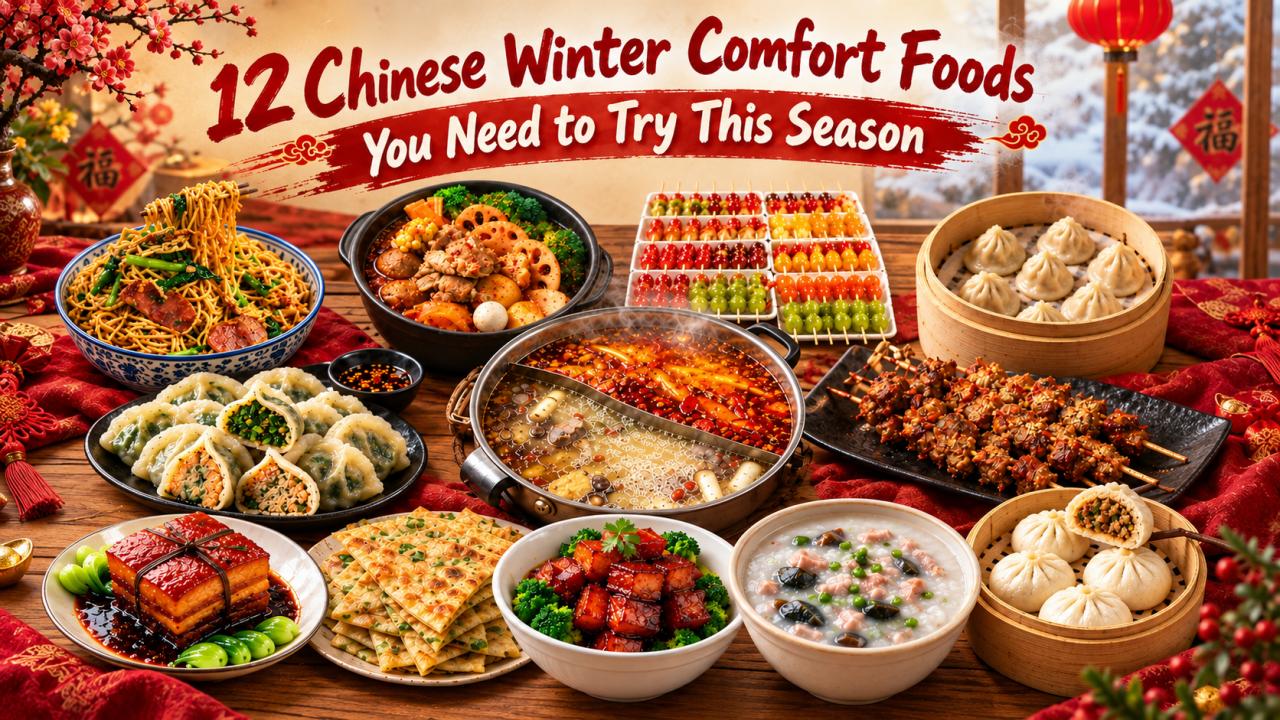
I spent the last few weeks testing my way through the Chinese dishes that hit hardest once the temperature drops, and I ranked them the way I actually experience them: by how well each one matches a winter scene — a freezing night with friends, a solo sick day, a craving that hits at 11pm. I built a simple tier list template, S through D, based purely on emotional payoff, not technicality or difficulty. Steal the template, rank your own favorites, and tell me where I got it wrong.
A few of these I've gone much deeper on individually — my malatang breakdown and my hotpot guide cover ingredients and technique in a way I can't fit here, so bookmark those if a dish pulls you in.
The Tier List at a Glance
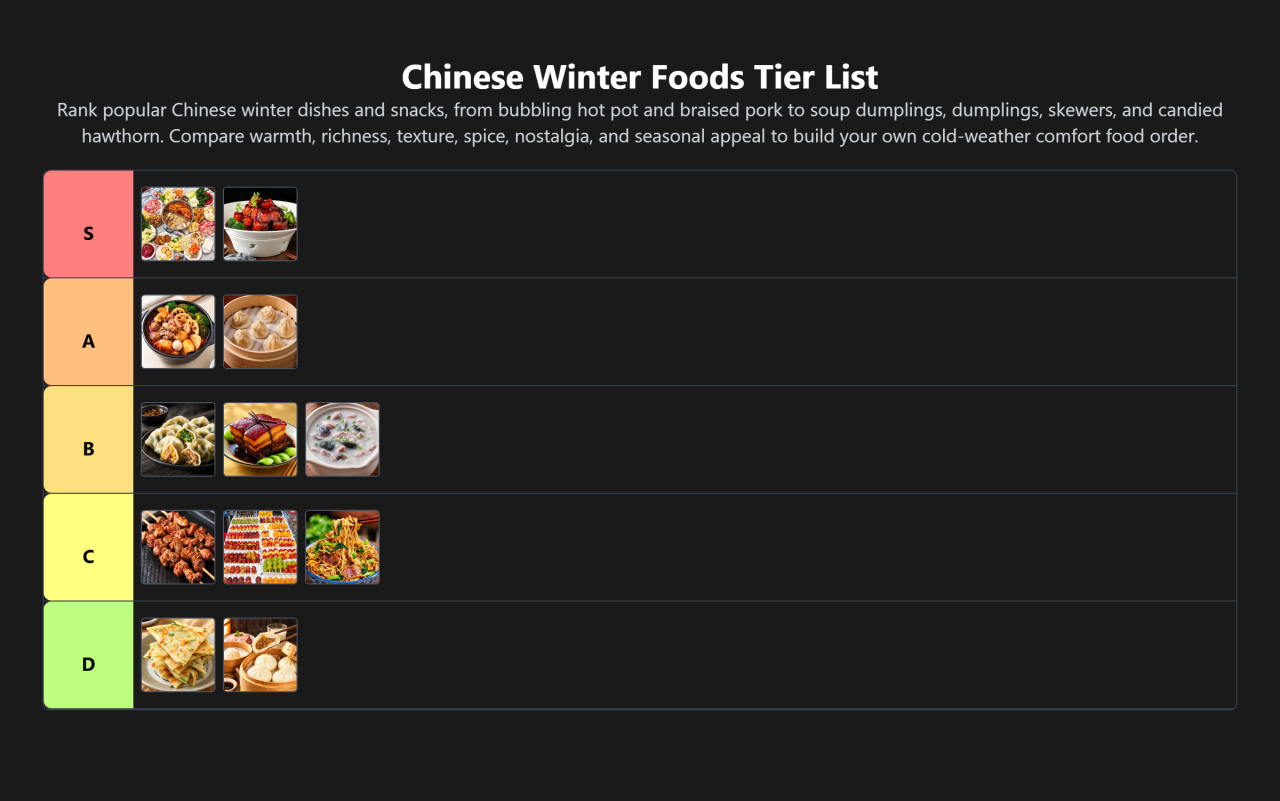
- S Tier: Hotpot, Braised Pork Belly (Hong Shao Rou)
- A Tier: Malatang, Soup Dumplings (Xiaolongbao)
- B Tier: Dumplings, Dongpo Pork, Century Egg Congee
- C Tier: Lamb Skewers (Chuan'r), Tanghulu, Chow Mein
- D Tier: Scallion Pancakes, Baozi
Here's why each one landed where it did — ranked purely by emotional and scenario fit for winter (which mood or moment each dish solves), not by popularity, difficulty, or flavor complexity alone.
S Tier: The Dishes That Define a Winter Night
Hotpot
Nothing else on this list fixes the specific feeling of "it's dark at 5pm and I need people around me" like hotpot does. You're not just eating, you're sitting around a pot for two hours with nowhere else to be, picking things out of broth with someone you like. It's the dish that turns a cold, uneventful Tuesday into something that feels like an occasion. That's an S tier feeling, no contest.
Braised Pork Belly (Hong Shao Rou)
This one surprised even me. On a pure "how does this make me feel" basis, hong shao rou hits somewhere deep and nostalgic — it's the dish that smells like someone's home, simmering low for an hour while you wait. There's a specific kind of winter comfort that only comes from something slow-cooked and a little indulgent, and this dish is basically built for the exact moment you want to be taken care of.
A Tier: Craving-Driven Comfort
Malatang
What makes a dish earn S or A tier here? It's whether it matches a craving you can actually feel coming on — and malatang is the textbook example. It's the dish for when you want something NOW, something spicy enough to make the cold disappear for a minute, something you pick out yourself so it feels personal. It's less about a shared evening and more about treating yourself, which is its own kind of winter necessity.
Soup Dumplings (Xiaolongbao)
There's a specific joy in biting into something that releases hot broth the second your teeth go in — it's almost theatrical. Soup dumplings feel celebratory in a way most dumplings don't; they're the dish I want on a day that deserves a little ceremony, not just a quick meal. That emotional lift is what keeps them out of B tier.
B Tier: Reliable, Warm, Slightly Less Dramatic
Dumplings
Pork dumplings carry a quieter kind of comfort — the "someone made these for me" feeling, even when you made them yourself from the freezer. They're less of an event and more of a steady presence, the dish you reach for without even thinking about it on a cold weeknight.
Dongpo Pork
This one leans into special-occasion indulgence — rich, slow-braised, a little decadent. It doesn't hit the same "I need this right now" urgency as malatang, but when you do make time for it, it delivers a kind of satisfaction that lingers. A great Sunday dish, not quite a Tuesday one.
Century Egg Congee
Is congee really a "comfort" dish, or just a sick-day default? Honestly, both — and that's exactly its charm. It's the dish I want when I'm not feeling great, or just need something gentle after too much hotpot the night before. It's quiet, undemanding comfort rather than an emotional high point, which is why it sits mid-list instead of near the top.
C Tier: Fun, But More Novelty Than Comfort
Lamb Skewers (Chuan'r)
Chuan'r is a scene more than a dish — standing outside at a night market, cold air, charcoal smoke, that first bite of smoky, cumin-dusted lamb. It's a great experience, but it's tied to a very specific setting that's harder to recreate at home, which knocks it down a tier on the pure comfort scale.
Tanghulu
Tanghulu is pure joy, not deep comfort — it's the dish that makes you smile rather than exhale. Great for a festive mood or a nostalgic throwback to childhood street stalls, but it's a snack, not something you turn to when you actually need to be comforted.
Chow Mein
Chow mein is dependable in the most unglamorous way — it's what you make when you're hungry and don't want to think too hard. That practicality is valuable, but it doesn't carry much emotional weight, which is why it lands lower here than it would on a pure popularity list.
D Tier: Background Comfort, Not a Craving
Scallion Pancakes
Scallion pancakes are a pleasant, crispy side character rather than the main emotional event of a meal. I'll always eat one happily, but it's rarely the dish I'm specifically craving on a hard winter day.
Baozi
Baozi are the most "every day" item on this list — reliable, unremarkable in the best way, the thing you grab without ceremony. That consistency is exactly why they land in D tier here: they're comfort food in the most literal, lowest-key sense, not something tied to a specific winter feeling.
FAQ
Which Chinese winter dish is trending the most right now? Malatang is the one actually exploding — its search volume has more than doubled over the past two years, and it's riding a huge wave of viral street food clips. Hotpot still has the bigger overall search base, but malatang is growing faster than anything else on this list.
Do dumpling searches really spike in winter? Yes, noticeably. Both soup dumplings and pork dumplings show a clear seasonal pattern, with search interest climbing through the end of the year and peaking in December and January — right when everyone wants something hot and wrapped in dough.
Is chow mein still a top search term, or is interest fading? It's a bit of both. Chow mein still pulls a huge search volume and even matches hotpot's growth rate, but some restaurant-industry data shows its menu share softening slightly year over year, even as home-cooking searches for it stay strong.
Why do some dishes on this list have flat or low search growth? Dishes like braised pork belly, scallion pancakes, and baozi are long-standing staples rather than trending topics — their search demand is steady year-round instead of spiking, which just reflects that they're everyday comfort food, not a current viral moment.
Is "Chinese street food" itself a trending search category? Consistently, yes — it's one of the steadiest high-interest search categories in the Asian food space, regularly outperforming related terms like "Asian fusion cuisine." Malatang, tanghulu, and chuan'r all ride on that broader wave of interest.
Try building your own version of this tier list based on whatever matters most to you — taste, nostalgia, how easy it is to make at 9pm on a Tuesday. I'd genuinely love to see where you land.