iPhone Duo vs Every Foldable Phone: My 2026 Tier List
I ranked the iPhone Duo against every 2026 foldable phone I've tried — Galaxy Z Fold8 Ultra, Pixel 11 Pro Fold, OPPO Find N6 and more. My honest tier list.
Elijah 9 min read
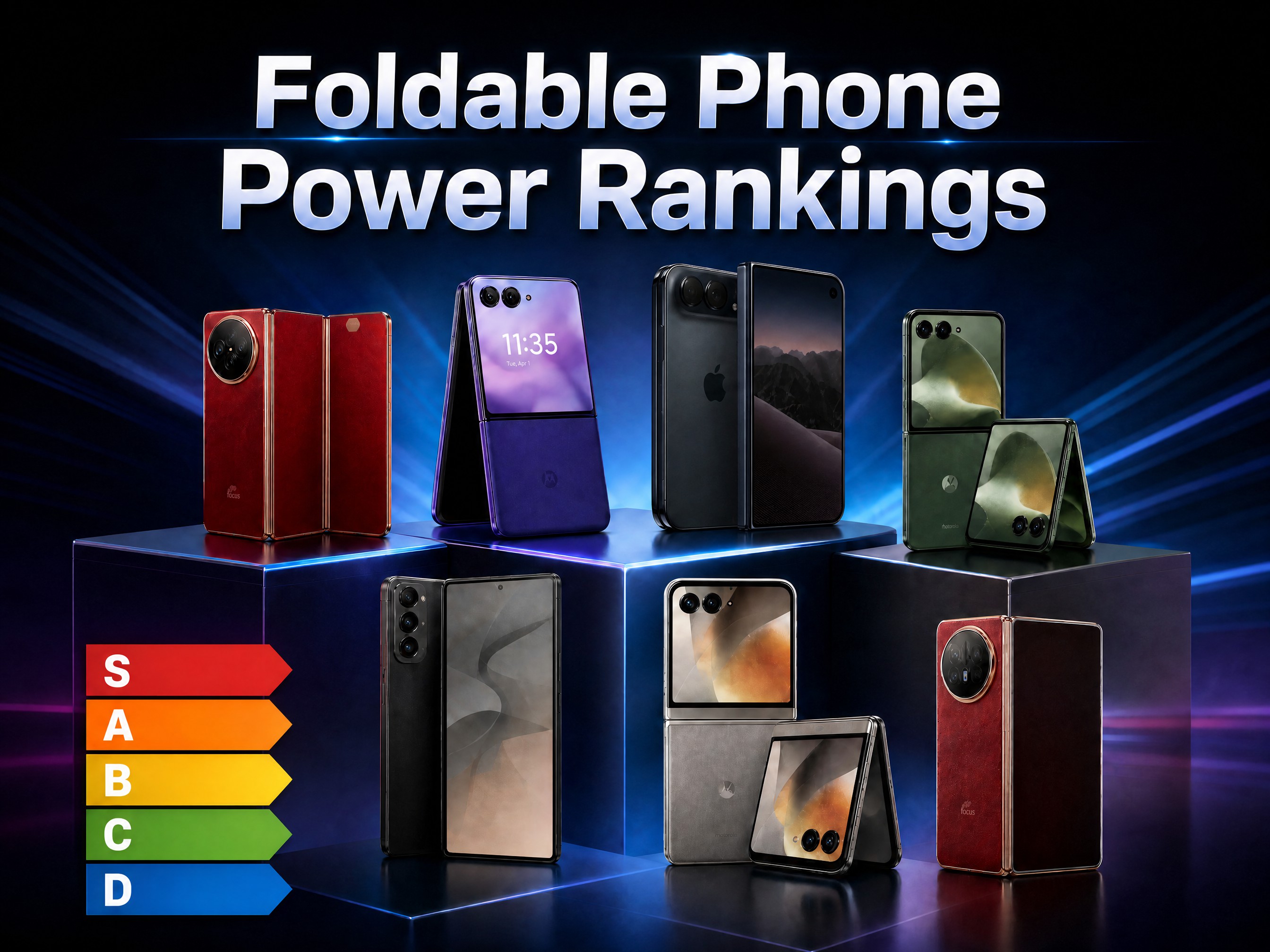
Where the iPhone Duo Actually Stands Right Now
Quick context in case you missed it: Apple's foldable went from years of "iPhone Fold" rumors to an official name — iPhone Duo — at the September 9 event, with a real ship date of October 23. That's still a few weeks out as I write this, so my read on it comes from hands-on demo time rather than weeks of daily carry.
What struck me in that demo time: it's noticeably thinner than the Samsung and Google folds I use daily, and one-handed typing on the outer display felt closer to a normal iPhone than I expected. What bugged me: no Face ID (you're back to a side button), and no telephoto lens at all, so the zoomed sample shots looked soft next to a regular iPhone 18 Pro. It's a genuinely clever first swing at foldable-specific software, but I'm not ranking a phone I haven't lived with above ones that are five-plus generations deep in working out their kinks.
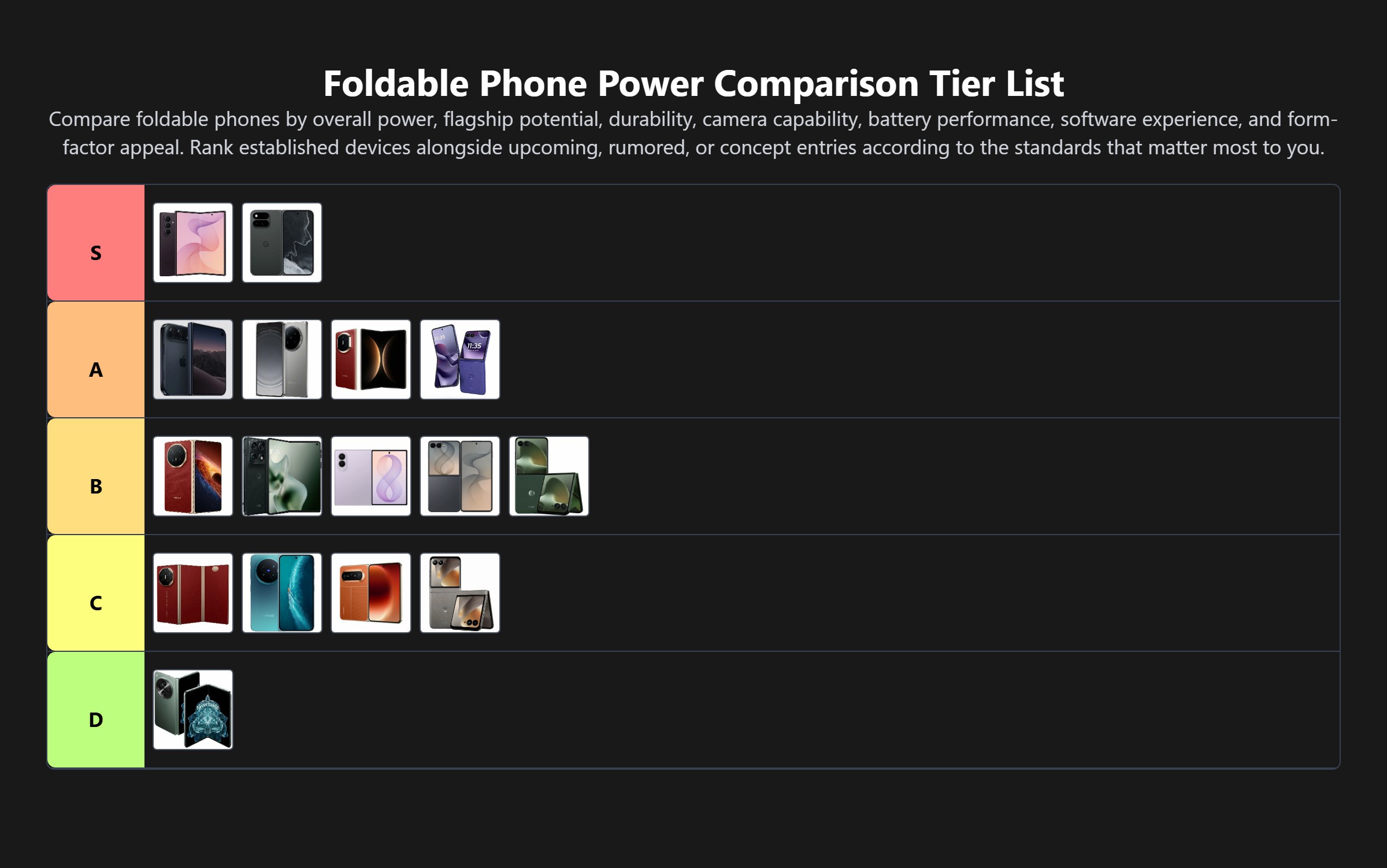
My 2026 Foldable Phone Tier List
- S Tier: Samsung Galaxy Z Fold8 Ultra, Google Pixel 11 Pro Fold
- A Tier: iPhone Duo, OPPO Find N6, Huawei Mate X7, Motorola Razr Ultra
- B Tier: Honor Magic V6 (Global), Motorola Razr Fold, Samsung Galaxy Z Fold8, Samsung Galaxy Z Flip8, Motorola Razr+
- C Tier: Huawei Mate XT2, vivo X Fold6, Huawei Pura X Max, Motorola Razr
- D Tier: OnePlus Open (2023)
S Tier
Samsung Galaxy Z Fold8 Ultra — This is the first big foldable that's stopped feeling like a "foldable" to me and just started feeling like a phone. Carrying it for a week, the thing that actually changed my habits was finally being able to text one-handed on the cover screen — every previous Fold made me use two hands for that. The hinge has a smoother, sloped opening now, so there's no little "catch" moment when you crack it open with a thumb. Where it loses me: the camera is great in daylight, but I had a couple of dim-restaurant shots come out noticeably soft, and there's no true telephoto, just a tight digital crop. It's also only rated IP48, so I still babied it near a pool in a way I never do with my Pixel. Still — as a "carry it and forget it folds" device, nothing else here gets this close.
Google Pixel 11 Pro Fold — I'll be blunt: it's heavier and thicker than the Samsung, and you feel the difference the second you switch between the two. But I've stopped caring, because it's the only phone on this list I've genuinely stopped worrying about. IP68 resistance on a foldable still isn't normal — I gave it a quick rinse under a tap after a beach day with zero anxiety, something I wouldn't try on the Fold8 Ultra. The 5x telephoto is also the one foldable camera here I'd reach for over my main phone rather than just settle for. My real complaint, carried over from last year: the volume rocker sits low enough that adjusting it one-handed is awkward, and switching an app from the cover screen to the big inner display still lags for a beat. Small stuff, but the kind you notice every day, not once in a review.
A Tier
iPhone Duo — Covered above — impressive first attempt, held back for me by the missing Face ID and telephoto, plus the simple fact I haven't lived with it yet.
OPPO Find N6 — Portrait shots out of this one are consistently the most flattering I've gotten from any foldable, the hinge is tight with almost no wobble, and it's sold widely enough overseas now that importing isn't really a question anymore.
Huawei Mate X7 — The classic book-fold formula done slim and light, sold across parts of Southeast Asia. If you can actually buy one where you live, it holds up as a genuinely nice daily driver — the app ecosystem gap is the only real asterisk.
Motorola Razr Ultra — This is the flip phone that made me stop thinking of Motorola's lineup as "the budget option." The cover screen is genuinely big enough to answer messages, check maps, or skim a feed without ever opening it — something Samsung's flip still doesn't quite match. Closed, there's barely any crease line to notice, and it doesn't feel like a compromise device the way flips used to. What keeps it out of S: it's still only IP48-rated, and I noticed the battery dipping faster than I'd like on days I used the cover screen heavily — closing the loop between "flagship flip" and "flagship phone" isn't quite there yet.
B Tier
Honor Magic V6 (Global) — Solid and unremarkable in a good way. It does everything a big fold should without a standout feature, which after a week of flashier phones is honestly kind of relaxing.
Motorola Razr Fold — Motorola's first attempt at a book-style fold rather than a flip. It's fine, but plays it safe enough that nothing about the experience stuck with me.
Samsung Galaxy Z Fold8 — Same DNA as the Ultra for less money and 14g heavier. If the Ultra's premium doesn't feel worth it, this is the sensible pick — just don't expect it to wow you.
Samsung Galaxy Z Flip8 — This one is the safe, polished choice, and I mean that as a compliment. The cover screen widgets are well thought out, the software feels finished in a way some competitors still don't. My complaint is that up close, with the phone unfolded flat, the crease is still noticeably there under certain lighting — Samsung's fixed this on the big Fold line but the Flip line hasn't quite caught up. No telephoto either, so photography stays firmly "good enough," not exciting.
Motorola Razr+ — Essentially the Razr Ultra experience for meaningfully less money — same-size cover screen, similar in-hand feel — the real difference shows up in day-to-day speed, where heavier multitasking has it lagging a beat behind the Ultra. For most people who just want the flip form factor without paying flagship prices, this is genuinely the one I'd point them to.
C Tier
Huawei Mate XT2 — The engineering here — a genuinely new folding hinge, the first tri-fold with real dust and water resistance — is honestly the most impressive thing I've touched all year. It lands in C purely because it's priced well above ¥19,000 and sold only in China, so I can admire it without being able to recommend it to most readers.
vivo X Fold6 / Huawei Pura X Max — Both look genuinely competitive on paper, but they're China-market exclusives with no confirmed global release, so they stay theoretical picks for most people reading this.
Motorola Razr (2026) — The entry point into Motorola's flip lineup, and it feels like one. The cover screen is noticeably smaller than its siblings, the back has more of a plasticky feel in hand, and the chip starts to stutter once you're juggling a few apps. It's a perfectly fine "first foldable" for someone on a budget, but next to the rest of this list it's clearly the compromise pick.
D Tier
OnePlus Open (2023) — Still on sale overseas, still fine, but it's now up against phones two generations newer while OnePlus quietly shelved the Open 2. Starting to show its age next to everything above it.
Why This Category Is Having a Moment
2026 has been a genuinely busy year for this category — Samsung split its Fold line into standard and Ultra variants for the first time, Huawei pushed a second-generation tri-fold with proper water resistance, Google leaned harder into durability with its toughest Fold build yet, and now Apple's finally in the mix. That's a lot of real, shipping hardware in one calendar year, which is part of why the "which foldable is actually best" conversation has gotten so much louder lately.
How I Turned This Into a Shareable Ranking
Honestly, typing out five tiers of opinions felt like a lot of work without something visual to show for it, so I ended up messing around with a free tier list maker instead of just posting a text list. It's browser-based, zero login required, and their foldable phones template already had every device I cared about pre-loaded — I just dragged things around, tweaked a few tier colors, and swapped in my own photos where I wanted. Took maybe five minutes start to finish, then exported the whole board as a PNG.
So — where would you put the iPhone Duo once it's actually out? I'm holding it at A for now, but I reserve the right to move it once I've had one for a month. Let me know your own ranking in the comments.
FAQ
How many foldable phones did Samsung release in 2026?
Three: the Galaxy Z Fold8, the Galaxy Z Fold8 Ultra (Samsung's first "Ultra" foldable), and the Galaxy Z Flip8, all launched August 7, 2026.
Is the iPhone Duo better than the Samsung Galaxy Z Fold8 Ultra?
Not in my current ranking, but it's close on ambition. The Z Fold8 Ultra wins on real-world durability testing, one-handed usability, and having actually been on the market long enough to iron out early bugs. The Duo's software vision is genuinely interesting, but I'm not ranking it above phones I've lived with for months when I've only had short hands-on time with it.
Why doesn't the iPhone Duo have Face ID or a telephoto lens?
The book-style hinge and thin titanium build appear to be the trade-off — Apple went with a Touch ID side button instead of Face ID hardware, and skipped telephoto in favor of a slimmer overall profile and a hidden under-display FaceTime camera.
Is TierMakerPro free to use, and do I need an account?
Yes — free, no sign-up. Open a template, drag phones into tiers, rename or recolor the rows, upload your own images if you want custom photos, and export the finished ranking as a PNG.