Anime and Manga
Ultraman Heroes Tier List
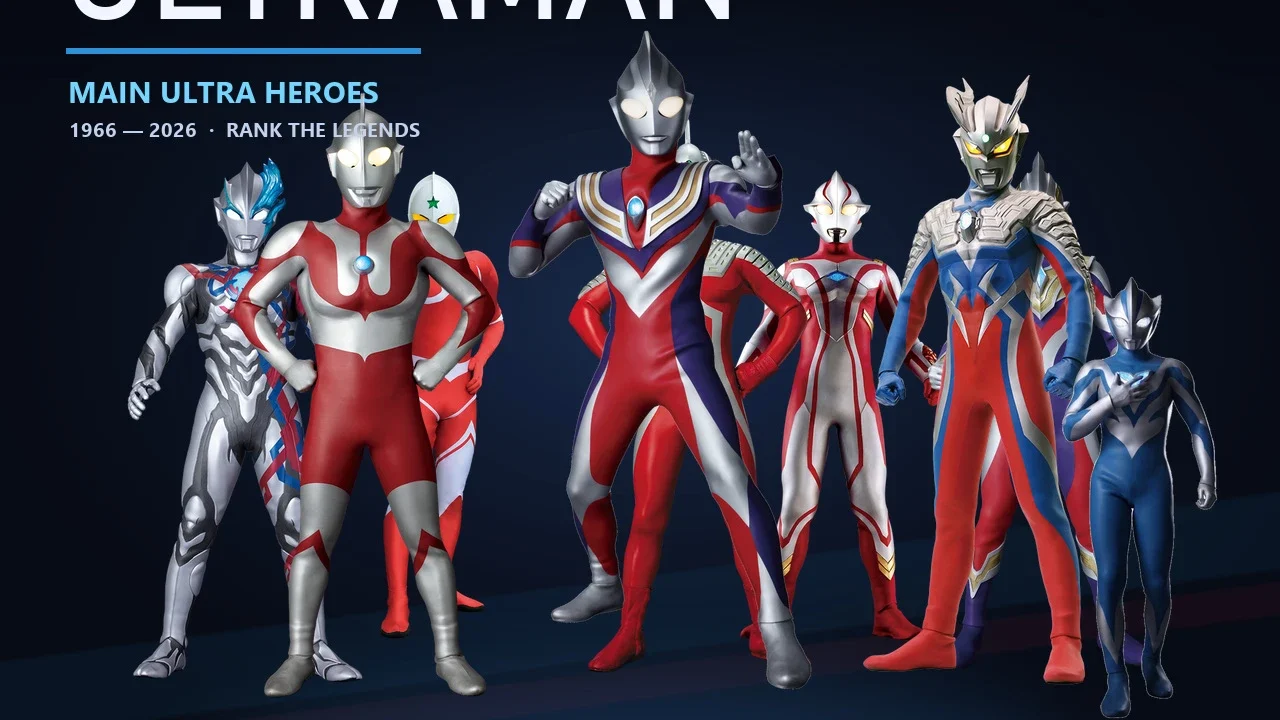
Rank the main Ultraman heroes from the Showa, Heisei, New Generation, and Reiwa eras. Compare combat strength, design, storytelling, historical significance, and personal favorites. This list focuses on heroes, not monsters or separate transformation forms.
Ultraman Heroes comes with preloaded items so you can begin ranking immediately, but the board is still flexible enough to reflect your own criteria.
You can also explore Anime and Manga templates, or create a blank tier list to keep ranking what you like.
Note: This tier list is for temporary editing. The system template may update, while images and text you add are saved in this browser and can be restored after a refresh or when you reopen the page.
Inside the template
Meet every option in Ultraman Heroes
Build your own order of Ultraman heroes from 1966 through 2026. Decide how much combat feats, costume design, character development, memorable stories, and franchise influence should matter, then compare each hero as a complete character rather than splitting every form into a separate entry. Newer heroes can sit alongside established legends when the same criteria are applied.
Editorial review: 2026-11-13
-
Ultraman
Introduced in Ultraman (1966), the original hero merges with Science Special Search Party member Hayata and defends Earth using techniques including the crossed-arm Spacium Beam. His red-and-silver silhouette established the franchise’s central heroic image, making him a foundational benchmark for historical importance, recognizable design, and straightforward combat rather than the versatility of later transformation systems.
Official source -
Zoffy
Zoffy first appears in the finale of Ultraman, arriving after Ultraman’s defeat by Zetton, and is associated with the signature M87 Beam. His later position as leader of the Inter Galactic Defense Force and the Ultra Brothers gives him particular historical weight; rank his leadership and rescue role separately from the sustained character development of television protagonists.
Official source -
Ultraseven
The title hero of Ultraseven (1967) stands apart through his predominantly red body, removable Eye Slugger, and forehead-fired Emerium Beam. His decision to protect Earth after witnessing human self-sacrifice gives his heroism a clear emotional foundation, making him a strong candidate when ranking distinctive design, humanity-focused storytelling, and the historical breadth of early Ultra heroes.
Official source -
Ultraman Jack
Leading Return of Ultraman (1971), Ultraman Jack fights alongside MAT through his bond with Hideki Go and uses both the Spacium Beam and the versatile Ultra Bracelet received from Ultraseven. As the lead hero of the franchise’s television return, he offers a useful ranking balance between classic visual continuity, adaptable equipment, and a human-centered protagonist’s continuing struggles.
Official source -
Ultraman Ace
Introduced in Ultraman Ace, this Showa-era lead hero distinguishes himself through a broad arsenal of beam techniques, especially cutting attacks, with the Metalium Beam as his signature finisher. His forehead Ultra Star adds a distinctive detail alongside the chest Color Timer. Rank him for technical variety, recognizable design, and his place among the franchise’s classic television protagonists rather than assuming versatility guarantees victory.
Official source -
Ultraman Taro
The title hero of Ultraman Taro is the biological son of Father of Ultra and Mother of Ultra, and the sixth Ultra Brother. His prominent Ultra Horns and T-shaped Strium Beam firing pose provide clear visual ranking points. As a classic Showa protagonist embedded in the franchise’s family mythology, he suits comparisons emphasizing heritage, silhouette, and signature attacks without relying on numerical power claims.
Official source -
Ultraman Leo
Ultraman Leo introduces a survivor of Planet L77 who lives on Earth as Gen Otori and takes over its defense after Ultraseven loses his transformation ability. His signature Leo Kick concentrates energy into a descending, flame-wrapped strike. This Showa lead offers a distinct ranking case built around an outsider’s story, close-combat spectacle, and succession to an established hero rather than beam variety alone.
Official source -
Astra
Astra first appears in Ultraman Leo as Leo’s younger twin brother, reunited with him after their separation during Planet L77’s destruction. The chain on his left thigh recalls his captivity, while Ultra Double Flasher showcases the brothers’ coordinated fighting. His place as a supporting Showa hero makes teamwork, distinctive visual storytelling, and memorable assistance more useful ranking criteria than the expectations applied to a series lead.
Official source -
Ultraman Joneus
Introduced in the 1979 animated series The☆Ultraman, Ultraman Joneus represents U40 rather than the familiar Land of Light and fights with the Planium Beam. His animated origins give him a distinctive place among Showa heroes, making him especially worth considering when ranking franchise variety, beam techniques, and historical significance rather than live-action nostalgia alone.
Official source -
Ultraman 80
Ultraman 80 debuted in the 1980 series Ultraman 80, where his human identity, teacher Takeshi Yamato, connects protecting Earth with guiding young people. Fast, acrobatic combat and the Succium Beam distinguish this Showa lead; rank him for physical performance, the unusual school-centered premise, and his place in the television lineage rather than elaborate transformation systems.
Official source -
Ultraman Tiga
The lead of Ultraman Tiga (1996), Tiga revives through Daigo and adapts to enemies using Multi, Sky, and Power Types, with the Zeperion Beam among his signature attacks. As the opening hero of the Heisei television revival, he offers strong comparison points in adaptable combat, color-changing design, human-centered storytelling, and influence on subsequent protagonists.
Official source -
Ultraman Dyna
Following Tiga in the 1997 series Ultraman Dyna, Dyna emerges when Super GUTS pilot Shin Asuka refuses to surrender during an encounter with Sphere. Flash Type's Solgent Beam, Miracle Type's unusual abilities, and Strong Type's physical emphasis offer contrasting combat styles; his place in the TDG succession and dimension-stranding finale reward rankings centered on versatility, resolve, and dramatic impact.
Official source -
Ultraman Gaia
Debuting in Ultraman Gaia (1998), Gaia draws his power from Earth itself and fights with the whip-like Photon Edge and crossed-arm Quantum Stream. His growing recognition that Earth's monsters also deserve protection gives this Heisei lead a distinctive ecological perspective, making character development, beam choreography, and his relationship with Agul useful ranking criteria alongside combat performance.
Official source -
Ultraman Agul
Introduced in Ultraman Gaia (1998), Agul embodies the blue light of the sea, contrasting Gaia through both his appearance and his initially uncompromising approach to protecting Earth. Photon Crusher and the close-range Agul Blade define his arsenal; as Gaia's opposing counterpart, he is especially rewarding to rank for visual contrast, ideological conflict, and the evolution of his convictions.
Official source -
Ultraman Cosmos
The lead of Ultraman Cosmos (2001), Cosmos distinguishes himself through compassion, using flowing, tai chi-inspired movements and Full Moon Rect to calm monsters rather than automatically destroy them. His partnership with Musashi Haruno places coexistence at the center of his television story, making restraint, rescue abilities, and thematic consistency more revealing ranking criteria than destructive spectacle alone.
Official source -
Ultraman Justice
Justice first appeared in Ultraman Cosmos 2: The Blue Planet (2002), pairing speed and strength with the Victorium Beam and Ultra Psychokinesis. A major cinematic counterpart to Cosmos, Justice later questions a mission to condemn humanity, making moral reassessment, decisive battle contributions, and the tension between universal justice and individual compassion particularly useful dimensions for ranking this hero.
Official source -
Ultraman Nexus
Introduced in Ultraman Nexus, this silver hero bonds with successive chosen humans called Deunamists, making inherited light central to his identity. His red Energy Core and forearm weapons distinguish a design whose signature attacks include Cross Ray Schtrom. As a lead hero built around changing human partners, he rewards rankings that value narrative continuity, visual distinctiveness, and perseverance rather than isolated victories.
Official source -
Ultraman Max
Ultraman Max introduces an M78 visitor who joins Kaito Toma after witnessing his selfless courage. A head crest housing the Maximum Sword, the Maximum Cannon beam, and the later Max Galaxy weapon give him a varied combat toolkit. His place in the M78 heroic tradition makes him worth comparing through weapon versatility, decisive action, and the balance between alien protection and humanity's independence.
Official source -
Ultraman Mebius
The lead of Ultraman Mebius grows into a capable protector through his friendships with CREW GUYS, living among them as Mirai Hibino. His Mebius Brace and Mebium Shoot provide recognizable equipment and a signature finishing beam. That progression from inexperienced fighter to dependable hero makes him a strong candidate when ranking character development, human teamwork, and the series' ideal of combining strength with kindness.
Official source -
Ultraman Hikari
First appearing in Ultraman Mebius through his Hunter Knight Tsurugi identity, Hikari moves from vengeance toward fighting alongside Mebius. His background in the Land of Light's Space Science Technology Bureau separates him from conventional warrior introductions, while the Knight Beam Blade anchors his sword-based style. Rank him for that scientist-to-defender trajectory, redemption story, and partnership as well as his combat performances.
Official source -
Ultraman Zero
Debuting in Mega Monster Battle Ultra Galaxy: The Movie (2009), Ultraman Zero is Ultraseven’s son, wielding twin Zero Sluggers and martial arts learned from Leo and Astra. His battles against Belial and role connecting older heroes with the New Generation make him especially relevant when ranking combat versatility, character growth, and franchise influence.
Official source -
Ultraman Ginga
Ultraman Ginga launched the New Generation television lineage with Ultraman Ginga (2013), uniting with Hikaru Raido through the Ginga Spark. His glowing crystals change color to activate different abilities, alongside his Ginga Cross Shoot finisher. Weigh his era-opening significance and luminous design against how convincingly his partnership with Hikaru develops on screen.
Official source -
Ultraman Victory
Introduced in Ultraman Ginga S (2014), Ultraman Victory is the hero associated with Sho and the underground Victorian people. His Victory Lancer lets him turn Spark Doll monster abilities into right-arm weapons, while Victorium Shoot provides a signature beam attack. As Ginga’s fellow early New Generation hero, he rewards rankings emphasizing tactical variety and distinctive characterization.
Official source -
Ultraman X
In Ultraman X (2015), Ultraman X exists as data within the Xdevizer and materializes by uniting with Xio member Daichi Oozora. An X-shaped chest timer and Xanadium Beam distinguish this early New Generation lead. Rank him through the coherence of his digital concept, his developing communication with Daichi, and the story’s emphasis on understanding unfamiliar beings.
Official source -
Ultraman Orb
Introduced in Ultraman Orb, wandering hero Gai Kurenai uses the Orb Ring and Ultra Fusion Cards to draw on other Ultras’ powers. His own original identity fights with the sword Orb Calibur, giving him appeal beyond borrowed abilities. Within the New Generation lineup, rank him for combat versatility, his traveling-hero characterization, and how effectively his story balances inherited power with personal identity.
Official source -
Ultraman Geed
Ultraman Geed introduces Riku Asakura, Belial’s son, who transforms using the Geed Riser and Ultra Capsules through Fusion Rise. His signature Wrecking Burst accompanies a story about refusing to let an inherited connection to evil determine his future. Geed’s place in the New Generation makes him especially rewarding to rank for character growth, the handling of Belial’s legacy, and transformation variety.
Official source -
Ultraman Rosso
As the elder brother in Ultraman R/B, Katsumi Minato becomes Ultraman Rosso using the R/B Gyro and Crystals. His basic Flame form draws on the fire attribute of the Taro Crystal, complementing a powerful close-combat style and careful battlefield observation. Part of the franchise’s first brother-led television series, Rosso suits rankings that value measured fighting, sibling teamwork, and elemental presentation.
Official source -
Ultraman Blu
The younger Minato brother, Isami, transforms into Ultraman Blu in Ultraman R/B with the R/B Gyro and Crystals. His basic Aqua form uses the Ginga Crystal’s water attribute, while his fighting emphasizes bold moves, speed, and exploiting enemy weaknesses. Sharing the franchise’s first brother-led television series with Rosso, Blu is best assessed through agility, contrasting sibling personalities, and cooperative battle performance.
Official source -
Ultrawoman Grigio
Introduced in Ultraman R/B The Movie: Select! The Crystal of Bond (2019), Grigio is the hero transformed by Asahi Minato, sister of Rosso and Blu. Her defensive and healing abilities distinguish her from more attack-focused teammates. As a female hero of the New Generation ensemble, she rewards rankings that value support, family storytelling, and team contribution over solo victories.
Official source -
Ultraman Taiga
Taiga headlines Ultraman Taiga (2019), the franchise’s first television series of the Reiwa era, and carries the legacy of his father, Ultraman Taro. His signature Strium Blaster complements a story about earning recognition and growing alongside Hiroyuki and the Tri-Squad. Rank him for generational significance, emotional development, and teamwork rather than assuming his ancestry guarantees superiority.
Official source -
Ultraman Titas
The heavyweight specialist of Ultraman Taiga (2019), Titas is a warrior-sage from U40, the homeworld associated with Ultraman Joneus. His muscular build, strength-driven combat, and Planium Buster give him a distinct identity within the Tri-Squad. He is particularly useful for rankings weighing physical choreography, imposing design, and the continuation of U40’s place in Ultra history.
Official source -
Ultraman Fuma
Speed rather than bulk defines Fuma, introduced in Ultraman Taiga (2019) as a hero from Planet O-50. Ninja-like movement and his Polar-Star Light Wave Shuriken distinguish his combat, while his origins connect him to the tradition associated with Orb, Rosso, and Blu. Within the Tri-Squad, rank him for agility, technique variety, and loyal characterization rather than raw strength alone.
Official source -
Ultraman Ribut
First appearing in the Malaysian animation Upin & Ipin, Ultraman Ribut later entered live-action in Ultra Galaxy Fight: New Generation Heroes (2019). His martial arts, left-arm Ribut Blocker, and Galaxy Rescue Force duties emphasize protection rather than spectacle alone. His cross-cultural origins make him especially interesting when ranking international significance, defensive fighting style, and supporting-hero performances.
Official source -
Ultraman Z
Ultraman Z (2020) introduces this earnest rookie, who admires Ultraman Zero and becomes his disciple. His signature Zestium Beam contrasts with the comic awkwardness of a hero still learning Earth's language and customs. As a Reiwa television lead, he offers a useful ranking balance between combat presentation, developing competence, and an approachable personality rather than established veteran authority.
Official source -
Ultraman Trigger
Reviving an ancient giant through Kengo Manaka, Ultraman Trigger: New Generation Tiga (2021) positions Trigger as a spiritual successor to Tiga. Type Changes and the transforming Circle Arms give him distinct options for strength, speed, and weapon-based action. Rank him by how convincingly his ancient-light mythology and combat versatility refresh that legacy, while separating visual homage from independent storytelling achievement.
Official source -
Ultraman Decker
Leading Ultraman Decker (2022), Decker shares his light with Kanata Asumi as Sphere attacks disrupt humanity's expansion into space. Flash, Strong, and Miracle Types combine a signature Selgend Beam with contrasting physical and supernatural abilities. Created with Dyna's anniversary legacy in mind, he suits rankings that weigh tactical flexibility, youthful perseverance, and teamwork within the continuing world of Trigger.
Official source -
Ultraman Blazar
Debuting in Ultraman Blazar (2023), this hero joins SKaRD captain Gento Hiruma and attacks with Spiral Burrade, a spear of light shaped into a double helix. His series marked the New Generation Ultraman line’s tenth anniversary; rank him for the distinctive spear technique, communication-focused partnership, and unusual perspective of a defense-team captain who also transforms into Ultraman.
Official source -
Ultraman Arc
In Ultraman Arc (2024), Yuma unites with the being of light Rution, producing a hero whose appearance matches Yuma’s childhood drawing and whose finishing beam is Arc Finalize. This Reiwa lead foregrounds imagination within the franchise’s heroic tradition, making creative characterization, the childhood-sketch design concept, and the appeal of his partnership more useful ranking criteria than assumed superiority over earlier Ultras.
Official source -
Ultraman Omega
Ultraman Omega (2025) introduces an amnesiac alien who takes the human name Sorato and fights using the red Omega Slugger, a space boomerang. Arriving immediately before the franchise’s sixtieth-anniversary year, this Reiwa protagonist suits rankings that weigh weapon identity, alien curiosity, and friendship with an ordinary Earthling while exploring why an Ultraman chooses to protect Earth.
Official source -
Ultraman Teo
The franchise’s sixtieth-anniversary series Ultraman Teo (2026) follows a blue giant who loses his home planet and lives on Earth as veterinary student Ibuki Mitsuishi. His reluctance to fight contrasts with his determination to protect others, offering ranking criteria centered on blue-hero design, empathy toward living creatures, and an alien’s growth into a hero rather than anniversary status alone.
Official source
Customize this board without losing the structure that makes it useful
Ultraman Heroes comes with preloaded items so you can begin ranking immediately, but the board is still flexible enough to reflect your own criteria.
Related rankings and guides