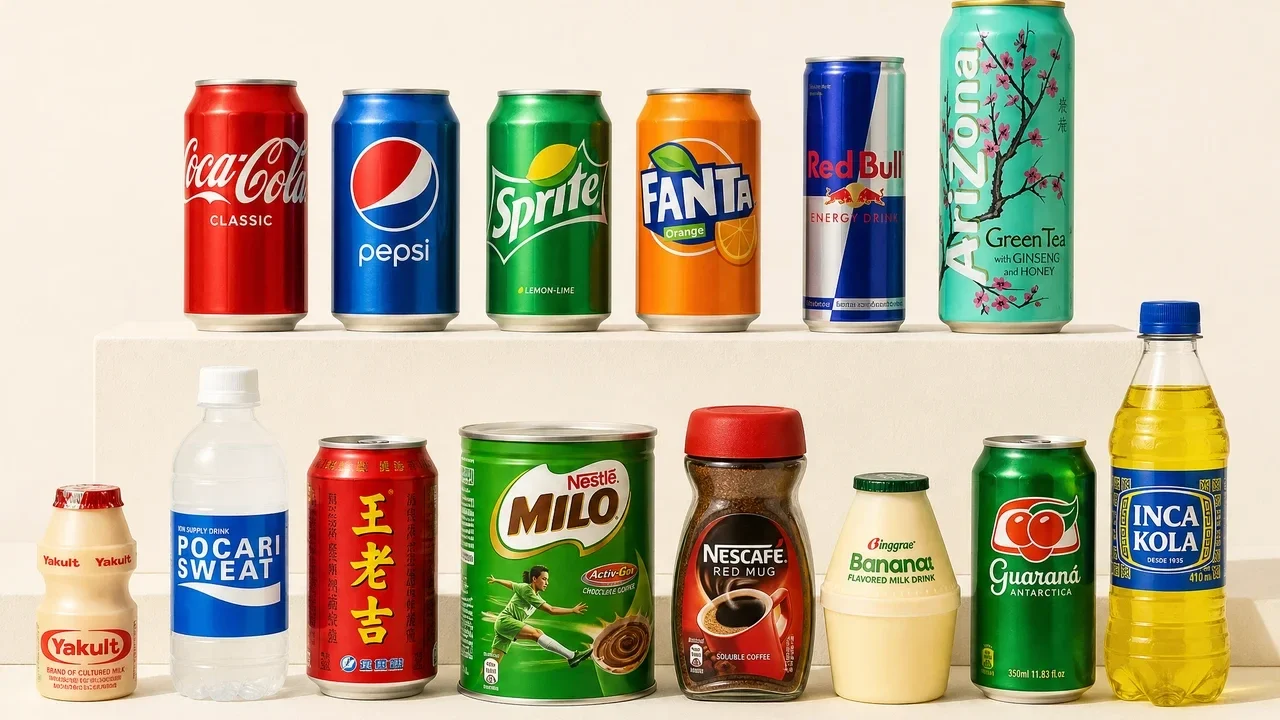
Think of the representative drink behind each brand, then rank it by how much you enjoy drinking it. Would you choose Coca-Cola over Pepsi, or Pocari Sweat before Gatorade? These 30 non-alcoholic brands span sodas, tea, coffee, juice, sports drinks, dairy and plant-based drinks, fruit cordials, and bottled water. Compare sweetness, acidity, carbonation, tea character, milkiness, and personal preference. For concentrates or powders, judge the prepared drink. Packaging and recipes vary by market, so use the classic variety shown as your reference.
-
1
Coca-Cola
Coca-Cola’s classic original red-can cola began in Atlanta in 1886, when pharmacist John Pemberton’s syrup was first served at Jacobs’ Pharmacy. Its familiar profile combines sweet caramel-like cola flavor, lively carbonation, and a lightly spiced finish. Rank it highly if you prefer iconic, full-bodied cola for meals, celebrations, or an unmistakably traditional soda experience.
Official source
-
2
Pepsi
Pepsi’s classic cola traces back to pharmacist Caleb Bradham in New Bern, North Carolina; his “Brad’s Drink” was renamed Pepsi-Cola on August 28, 1898. The representative drink is a bright, sweet, highly carbonated cola suited to people who enjoy a lively, easy-drinking profile. Its long association with sports, music, and entertainment also gives it a distinctly pop-culture character.
Official source
-
3
Sprite
Sprite represents the classic lemon-lime soda: crisp, citrusy, strongly sparkling, and caffeine-free. The brand’s signature flavor has been offered since 1961, making it a long-standing alternative to darker colas. Rank it higher if you prefer a clean, sharp citrus finish, especially with casual meals, hot-weather refreshment, or a lighter-tasting soda rather than a caramelized cola.
Official source
-
4
Fanta
Fanta’s representative drink is orange soda, with a vivid citrus aroma, pronounced sweetness, and lively carbonation. The brand began in Germany in 1940, while the orange drink familiar today developed in Italy in the 1950s. It suits people who enjoy bright, fruit-forward sweetness and an orange-candy character instead of cola’s darker caramel and spice notes.
Official source
-
5
Red Bull
Red Bull’s original drink launched in Austria in 1987, inspired by Thailand’s Krating Daeng. Its slim silver-and-blue can contains a carbonated drink with a distinctive sweet-tart, slightly citrus-like flavor. Compared with cola, the taste is sharper and more concentrated. It suits people who enjoy the recognizable original energy-drink flavor rather than a mild fruit soda.
Official source
-
6
7UP
7UP is the classic lemon-lime soda whose origins trace to the United States in the late 1920s. Its clear appearance, bright citrus acidity, and brisk carbonation offer a different experience from dark, caramel-flavored colas. It suits drinkers who prefer straightforward lemon-lime refreshment and a crisp finish, especially when they want a familiar citrus soda with meals.
Official source
-
7
Lipton Ice Tea
Lipton Ice Tea here means bottled, ready-to-drink lemon iced tea rather than tea bags. Black tea provides a mellow tea character beneath the sweetness, while lemon adds a lightly tangy finish. Served chilled, it feels softer and less fizzy than lemon-lime soda. It suits people who enjoy sweet tea with a citrus edge instead of strong carbonation.
Official source
-
8
Nescafé
Nescafé Classic represents instant coffee, not a café drink or a ready-to-drink sweetened coffee. Nescafé launched in Switzerland in 1938 after research connected to Brazil’s coffee surplus. The granules dissolve in hot water to make a bold, roasted cup that can be adjusted with milk or sugar. It suits drinkers who value convenient preparation and a pronounced coffee aroma.
Official source
-
9
Monster Energy
Monster Energy’s Original Green is the brand’s classic full-sugar drink, known for a bold sweet-and-salty profile with an exotic citrus twist rather than a simple cola taste. The brand’s presentation leans toward motorsports, music, and action-sports culture. It suits drinkers who prefer intense, highly sweet citrus flavors and a heavier energy-drink character.
Official source
-
10
Minute Maid
Minute Maid’s representative drink here is orange juice, not lemonade or punch. The brand grew from Florida’s 1940s frozen-concentrated orange-juice innovation, making orange flavor convenient for year-round home breakfasts. Compared with carbonated citrus drinks, it is fruitier, softer, and non-carbonated. It suits people who prefer familiar orange flavor, gentle acidity, and a breakfast-style juice profile.
Official source
-
11
Schweppes
Schweppes is represented by Indian Tonic Water, a carbonated mixer with noticeable bitterness and citrus-friendly character rather than a sweet lemon soda profile. Schweppes launched Indian Tonic Water in 1870, and the brand’s ownership and distribution vary by market. It suits drinkers who enjoy quinine-style bitterness, crisp carbonation, and a more adult mixer flavor, whether served alone or combined with other drinks.
Official source
-
12
Mountain Dew
Mountain Dew’s Original is a bold citrus soda whose formula was invented in the 1940s by Tennessee beverage bottlers Barney and Ally Hartman. Its bright, highly sweet citrus flavor and strong carbonation distinguish it from darker cola drinks and milder lemon-lime sodas. It suits people who prefer vivid citrus punch, pronounced sweetness, and an energetic American soft-drink style.
Official source
-
13
Dr Pepper
Dr Pepper began in Waco, Texas, in 1885 and was introduced more widely at the 1904 St. Louis World’s Fair. Its classic drink is a cola alternative built around a proprietary blend of 23 flavors, with a sweet, spiced, fruit-like profile. It suits drinkers who prefer layered, distinctive soda flavors over straightforward cola.
Official source
-
14
Gatorade
Gatorade was developed in 1965 by University of Florida researchers and became closely associated with American sports sidelines. This entry represents the classic Orange Thirst Quencher: bright citrus flavor, noticeable sweetness, and a clean, easy-drinking finish rather than cola or juice character. It suits people who enjoy vivid orange flavor and sports-drink styling.
Official source
-
15
Yakult
Yakult is a Japanese fermented dairy drink introduced in 1935, associated with the Shirota bacterial strain. The original version comes in a small signature bottle and has a sweet, gently tangy flavor with a light dairy texture. Its compact serving and distinctive fermented-milk taste set it apart from ordinary milk. It suits people who enjoy mild tartness and a sweet finish.
Official source
-
16
Milo
MILO launched in Australia in 1934 and became known as a malted chocolate drink made with malt barley, milk, sugar, and cocoa. The classic powder is commonly mixed with hot or cold milk, creating a creamy chocolate-malt taste with a lightly malty finish. It suits people who prefer richer, milk-based cocoa drinks over plain chocolate milk.
Official source
-
17
AriZona Iced Tea
AriZona Iced Tea is represented by the green tea with ginseng and honey in its recognizable pale-turquoise floral can. The American brand began in 1992. This variety combines mellow green-tea character with honeyed sweetness and a subtle herbal note. It suits drinkers who prefer sweet, still tea and a different flavor from conventional lemon iced tea.
Official source
-
18
Pocari Sweat
Pocari Sweat’s classic original flavor launched in Japan in 1980. This non-carbonated drink has a lightly sweet, gently citrus-like taste with a subtle salty edge, placing it between plain water and richer, sweeter sports drinks. Its blue-and-white packaging is especially recognizable across Asia. It suits people who enjoy a restrained, smooth flavor for everyday drinking or after activity.
Official source
-
19
Calpis
Calpis is represented by the original unflavored lactic-acid beverage, known as Calpico in North America. It was first released in Japan in 1919 and is made from a fermented-milk base, giving it a softly tangy, creamy, lightly sweet profile unlike carbonated lemon-lime drinks. It suits drinkers who enjoy gentle tartness, milky texture, and a distinctive fermented flavor served chilled or diluted.
Official source
-
20
Nongfu Spring
Nongfu Spring represents plain natural drinking water in this list. Founded in Zhejiang, China, in 1996, the brand is associated with source locations including Thousand-Island Lake and its familiar red-labelled bottles. Its still, unsweetened character offers a contrast to the sodas, teas, and milk drinks here. It suits people who prefer a neutral drink without sweetness, carbonation, or strong flavorings.
Official source
-
21
Wong Lo Kat
Wong Lo Kat represents Guangzhou Pharmaceutical’s red-can herbal tea, distinct from Jiaduobao. Its history traces to Guangzhou in 1828, and the brand also uses WALOVI overseas. The drink is non-carbonated, with pronounced sweetness and a gentle herbal, botanical finish. It suits people who enjoy Cantonese herbal-tea traditions and plant aromas rather than cola or citrus-soda flavors.
Official source
-
22
Vitasoy
Vitasoy’s classic drink is original soy milk, launched in Hong Kong in 1940 as a ready-to-drink alternative to dairy milk. Its softly sweet, creamy bean flavor is more cereal-like and savory than flavored milk or fruit juice. The brand later adopted high-temperature sterilization and carton packaging, making it especially suitable for drinkers who enjoy plant-based, gently nutty beverages.
Official source
-
23
Binggrae Banana Milk
Binggrae Banana Milk is a Korean banana-flavored milk beverage introduced in 1974. Its signature rounded container was inspired by the Korean moon jar, while the drink combines sweet banana aroma with a smooth dairy base rather than tasting like a carbonated soda. It suits people who prefer dessert-like milk drinks, nostalgic convenience-store flavors, and a soft, creamy finish.
Official source
-
24
Thums Up
Thums Up is an Indian cola launched in 1977, with a bold, strongly carbonated profile that is more assertive and spicy-tasting than many smoother international colas. Its identity is closely tied to India’s home-grown soft-drink culture and its confident, adventurous branding. Choose it if you prefer darker cola flavors, sharper fizz, and a pronounced finish over gentle sweetness.
Official source
-
25
Vimto
Vimto began in Manchester, England, in 1908 as a distinctive fruit-and-herb drink. The representative original cordial is diluted with water before drinking, combining grape, blackcurrant, and raspberry flavors with subtle herbs and spices. It suits people who enjoy dark-fruit sweetness and tangy squash-style refreshments rather than cola or simple lemon-flavored soda.
Official source
-
26
Rooh Afza
Rooh Afza is a rose-herbal syrup associated with Hamdard’s early-20th-century roots in Old Delhi. The classic serving is not a ready-to-drink soda: it is diluted with water or stirred into milk, producing a fragrant floral sweetness and vivid color. It fits drinkers who prefer perfumed, syrupy flavors and South Asian summer or festive refreshment traditions.
Official source
-
27
Inca Kola
Inca Kola launched in Peru in 1935 and is recognizable by its bright golden-yellow color. Its original soda has a strongly sweet, aromatic flavor often compared with bubblegum, setting it apart from dark, caramel-led colas. The drink is closely associated with Peruvian meals and everyday food culture. It suits adventurous soda drinkers who enjoy unusual sweetness and a fragrant finish.
Official source
-
28
Guaraná Antarctica
Guaraná Antarctica originated in Brazil in 1921 and is made around the characteristic flavor of guaraná fruit sourced from the Amazon region. Its classic soda is lighter and fruitier than cola, with a fragrant, gently sweet profile that became closely associated with Brazilian everyday drinking culture. It suits people who prefer soft fruit notes over caramel-heavy cola flavors.
Official source
-
29
Jarritos
Jarritos is a Mexican soda brand that began in the 1950s, and this entry represents its Mandarin flavor. The clear glass bottle shows a vivid orange drink with bright citrus aroma, pronounced sweetness, and lively carbonation. It is often enjoyed alongside Mexican food. It suits people who prefer fruit-forward orange soda over caramel cola or sharper lemon-lime flavors.
Official source
-
30
Irn-Bru
Irn-Bru is a Scottish soft drink dating to the early 1900s, originally sold under the name Iron Brew. Its original soda is bright orange but has an elusive sweet, fruity flavor often compared with bubblegum or tutti-frutti, rather than a straightforward orange taste. It suits people who enjoy distinctive regional sodas and unconventional flavors beyond familiar cola.
Official source