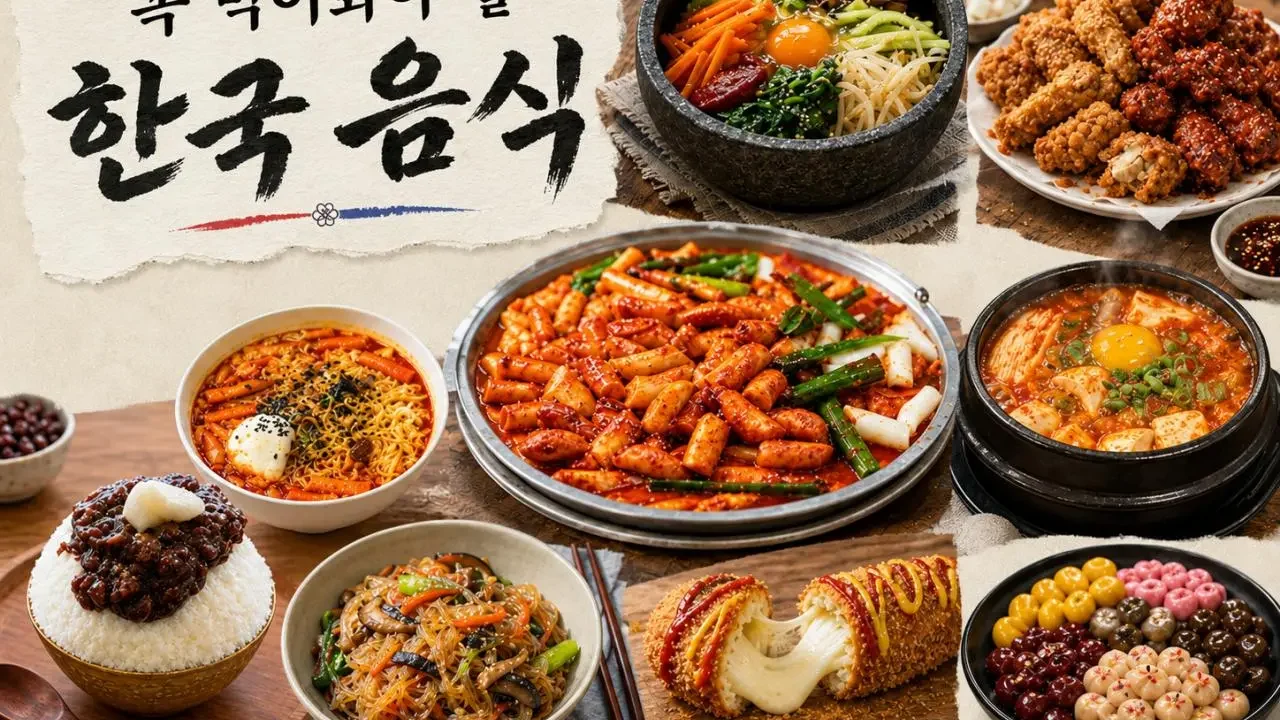
Korean cuisine spans a remarkable range — from the fiery, fermented punch of kimchi and tteokbokki to the delicate comfort of sundubu-jjigae and samgyetang. Street-side stalls serve hotteok and fish cake skewers, while weekend grills sizzle with bulgogi and samgyeopsal. This template covers 23 beloved dishes that define Korean food culture, giving you the framework to rank them by personal taste, cultural nostalgia, or sheer craving power.
-
1
Bibimbap
Bibimbap is a bowl of warm rice topped with seasoned vegetables, often beef, a fried or raw egg, and gochujang sauce, mixed together before eating. Its appeal comes from contrast: nutty rice, crisp namul, savory meat and a spicy-sweet sauce in one bite. It is widely ordered as a balanced everyday meal across Korea.
-
2
Korean Fried Chicken
Korean fried chicken is coated in a thin, very crisp batter and fried twice, then often glazed with soy-garlic or sweet-spicy gochujang sauce. The double-frying gives a shell that stays crunchy under sauce. Its popularity rests on that texture plus its role as the classic companion to beer, known as chimaek.
-
3
Tteokbokki
Tteokbokki simmers cylindrical rice cakes and often fish cake in a glossy sauce of gochujang, sugar and stock. The rice cakes are chewy while the sauce is sweet, spicy and slightly thick. Sold widely at street stalls and snack shops, it is one of Korea's most affordable and beloved comfort snacks for all ages.
-
4
Kimchi
Kimchi is napa cabbage salted, then fermented with chili powder, garlic, ginger and salted seafood. The result is tangy, salty and spicy, with a crunch that softens as it ages. Served as a side dish at nearly every Korean meal, it is central to the cuisine and is also used in stews and fried rice.
-
5
Bulgogi
Bulgogi is thinly sliced beef marinated in soy sauce, sesame oil, garlic, and Asian pear or kiwi, which tenderizes the meat naturally. It is one of Korea's most internationally recognized dishes, frequently cited in surveys of popular Korean foods abroad. Traditionally grilled over charcoal, it is now widely cooked on tabletop grills or stovetops, making it a staple at both home kitchens and Korean restaurants worldwide.
Official source
-
6
Gimbap
Gimbap consists of steamed rice seasoned with sesame oil and fillings such as egg, pickled radish, and spinach, rolled in dried seaweed and sliced into rounds. Unlike Japanese sushi, it uses sesame oil rather than vinegar. It is South Korea's most popular portable meal, sold at nearly every convenience store and street stall, and is the go-to choice for picnics, school lunches, and quick weekday meals.
Official source
-
7
Samgyeopsal
Samgyeopsal is thick-cut pork belly grilled directly at the table on a gas or charcoal grill, then wrapped in perilla or lettuce leaves with garlic, sliced green onion, and ssamjang paste. It consistently ranks among South Korea's most-ordered restaurant dishes and is the defining food of Korean social dining culture. Its pairing with soju makes it a near-universal choice for after-work gatherings and celebrations.
Official source
-
8
Korean Ramyeon
Korean ramyeon features dried wavy noodles in a spicy gochugaru-based broth, often finished with egg or processed cheese, and differs markedly from Japanese ramen in texture and flavor profile. South Korea ranks among the world's highest per-capita instant noodle consumers. Brands such as Nongshim Shin Ramyun are exported to over 100 countries and regularly top international spicy noodle rankings, cementing ramyeon as a cultural export.
Official source
-
9
Bingsu
Bingsu is a Korean shaved-ice dessert built on a mound of finely crushed or milk-based ice, topped with sweet red beans, tteok, fruit or condensed milk. It is a summer favorite across Korea, ordered in cafes and shared by groups, prized for its cooling texture and customizable toppings that range from classic patbingsu to modern fruit and cereal variations.
-
10
Kimchi Stew
Kimchi stew, or kimchi jjigae, simmers aged kimchi with pork, tofu and aromatics into a sour, spicy, deeply savory broth. It is one of Korea's most common home-cooked dishes, valued for turning well-fermented kimchi into a warming meal, and is a staple menu item in casual restaurants served with rice and banchan.
-
11
Jajangmyeon
Jajangmyeon features thick wheat noodles topped with a savory sauce of chunjang (fermented black bean paste), diced pork, and vegetables. A staple of Korean-Chinese cuisine originating from Incheon's Chinese immigrant community, it ranks among Korea's most popular delivery dishes and is traditionally eaten on Black Day (April 14) by singles. Its rich, earthy umami and affordable price make it a comforting everyday favorite.
Official source
-
12
Japchae
Japchae is a stir-fried dish of chewy dangmyeon sweet potato starch noodles tossed with sliced beef, carrots, onion, spinach and mushrooms, then seasoned with soy sauce, sesame oil and sugar. Sweet and savory rather than spicy, it appears at birthdays, weddings and holiday tables, and no Korean buffet or banchan spread feels complete without it. Its mild, springy texture and glossy sheen make it a crowd favorite among children and spice-averse diners alike.
-
13
Sundubu Jjigae
Sundubu jjigae is a bubbling Korean stew built on silken tofu so soft it breaks at the touch of a spoon, simmered with gochugaru, garlic and often pork, seafood or mushrooms, then finished with a cracked egg on top. It is a restaurant staple and a favorite late-night order, prized for delivering deep spicy warmth in minutes, and it is usually served with rice and banchan.
Official source
-
14
Naengmyeon
Naengmyeon covers Korea's cold noodle dishes: mul naengmyeon, where chewy buckwheat or starch noodles sit in chilled broth with pear and cucumber, and bibim naengmyeon, tossed in a sweet-spicy sauce. Originally a North Korean specialty from Pyongyang and Hamhung, it became a nationwide summer favorite and a classic post-barbecue finisher for its cooling, tangy contrast.
Official source
-
15
Haemul Pajeon
Haemul pajeon is a savory Korean pancake packed with scallions, squid, shrimp and sometimes oysters in a thin batter, pan-fried until the edges turn crisp and lacy. It is one of the most ordered anju snacks alongside makgeolli or soju, and on rainy days it draws crowds to pajeon restaurants, while families also make simpler versions at home as a quick side dish.
Official source
-
16
Hotteok
Hotteok is a street-food pancake with a wheat dough that puffs up on a griddle while a filling of brown sugar, cinnamon and crushed nuts melts inside, turning chewy and molten. Vendors sell it from carts mostly in autumn and winter, and it is beloved as a cheap hand-warmer and after-school treat, with savory variants like japchae or cheese-filled versions gaining fans.
Official source
-
17
Korean Cheese Corn Dog
A street food phenomenon that went viral globally, the Korean cheese corn dog features a stretchy mozzarella core coated in yeasted batter, then rolled in sugar, breadcrumbs, or crushed ramen pieces before deep-frying. Unlike the American corn dog, the sweet-savory contrast and dramatic cheese pull are central to the experience. Found ubiquitously at street stalls in Myeongdong, it became a defining social media street food exported worldwide.
Official source
-
18
Korean Fish Cake
Eomuk (어묵) is made from ground fish paste pressed into sheets, skewered on sticks, and simmered in a savory broth at pojangmacha street stalls across Korea. The accompanying broth is typically offered free as a warming drink. An affordable staple since at least the mid-20th century, eomuk is valued for its mild umami flavor and portability, making it one of Korea's most enduring and widely consumed street foods year-round.
Official source
-
19
Samgyetang
Samgyetang is a whole young chicken stuffed with glutinous rice, ginseng root, garlic, and jujubes, simmered for hours until the broth turns rich and milky. Traditionally eaten on the three hottest days of the Korean lunar calendar — Chobok, Jungbok, and Malbok — the dish embodies the principle of fighting heat with heat (이열치열). Its perceived medicinal and restorative properties sustain strong demand well beyond the summer season.
Official source
-
20
Seolleongtang
Seolleongtang is prepared by boiling ox bones and brisket for many hours until collagen renders into a milky white broth. One of Korea's oldest dishes with documented origins in the Joseon Dynasty, it is served unseasoned alongside rice and chopped green onions, letting diners salt to taste at the table. Valued for its gentle, restorative depth and digestibility, it remains a breakfast staple at traditional Korean restaurants nationwide.
Official source
-
21
Tteokguk
Tteokguk is a mild, clear soup featuring oval-sliced garae-tteok simmered in beef or anchovy stock. Unlike Tteokbokki's cylindrical rice cakes in spicy sauce, these flat oval slices turn silky-smooth during cooking. Traditionally eaten on Seollal (Lunar New Year) to symbolize gaining a year of age and welcoming good fortune, it is one of Korea's most culturally significant and widely beloved comfort foods.
Official source
-
22
Sundae
Sundae is Korea's iconic blood sausage, made from pig intestines stuffed with cellophane noodles, vegetables, barley, and pork blood — far milder and less iron-forward than European equivalents. A staple of pojangmacha street stalls and traditional markets, it is typically served alongside liver and lung with dipping salt or gochujang. Its low price and satisfying, chewy texture have made it a long-standing favorite among all demographics.
Official source
-
23
Paldo Songpyeon
Paldo Songpyeon are half-moon shaped rice cakes representing the distinct regional styles of Korea's eight historical provinces. Kneaded from rice flour and filled with sesame, red beans, or chestnut, they are the defining food of Chuseok, Korea's autumn harvest festival. Families traditionally steam them over pine needles for a subtle woody fragrance. Their deep ceremonial and seasonal significance keeps them central to Korean cultural identity year after year.
Official source