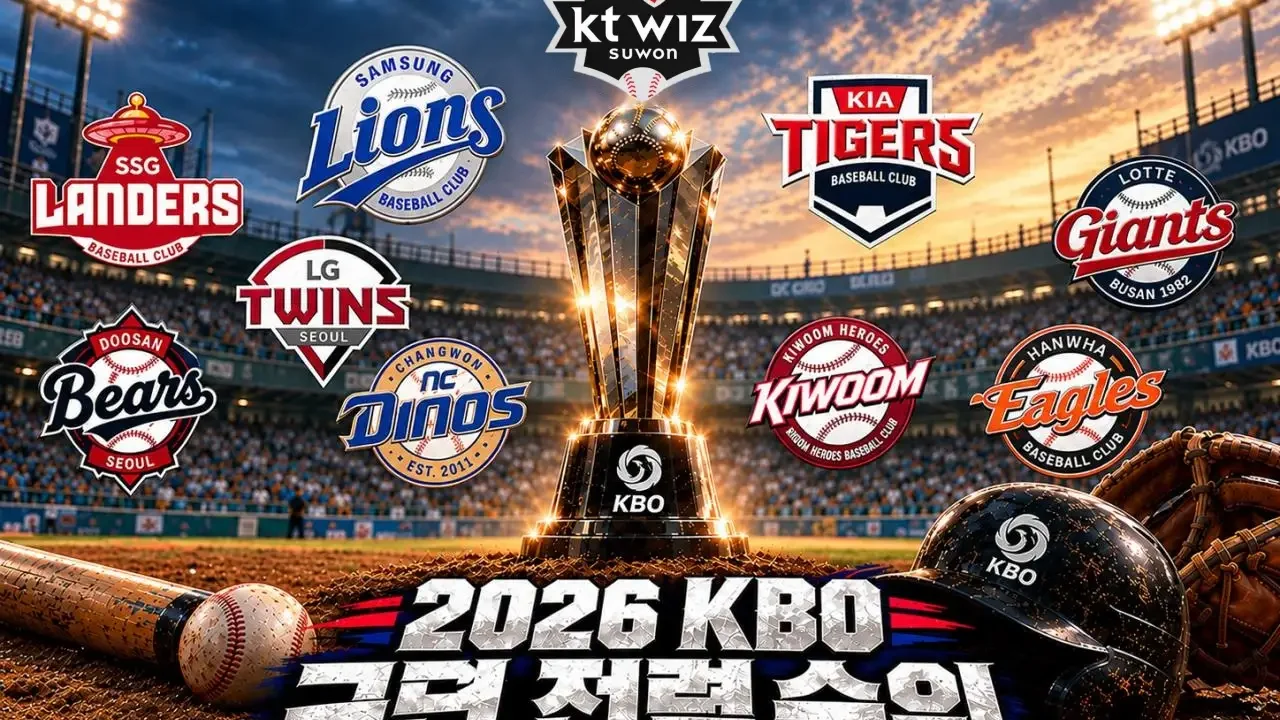
Use this guide to rank the KBO League’s ten clubs by popularity for 2026. Consider more than recent performance: weigh each team’s history, fan culture, city or regional identity, memorable players, rivalries, visual branding, and how enjoyable the club is to follow. There is no official popularity order, so place every team according to your personal connection and viewing experience.
-
1
KT Wiz
KT Wiz represent Suwon and entered the KBO in 2013, making them one of the league’s newer franchises. Their identity is closely associated with rapid growth, modern branding, and a 2021 Korean Series championship. For popularity rankings, they appeal to fans who value a younger club with a clear rise-to-prominence story.
Official source
-
2
Samsung Lions
Samsung Lions are based in Daegu and were established in 1982, giving them one of the longest histories in the KBO. The club has won eight championships, including a notable four-title run from 2011 through 2014. Their strong regional identity and decorated history make them a major factor in popularity comparisons.
Official source
-
3
KIA Tigers
KIA Tigers represent Gwangju and are the most successful franchise listed here by championship count, with 12 KBO titles. The club was established in 2001 under its current identity and carries the legacy of the Tigers tradition. Its winning record, passionate regional following, and championship culture strongly influence popularity rankings.
Official source
-
4
LG Twins
LG Twins are a Seoul-based franchise established in 1990, with four KBO championships. Their large-market location, recognizable red-and-black branding, and long-standing presence in the capital give them broad visibility. In popularity tiers, LG often stands out for combining a major Seoul fan base with a championship history that includes the modern era.
Official source
-
5
Doosan Bears
Based in Seoul and established in 1982 as the OB Bears, Doosan is one of the KBO’s foundational franchises. The club has six Korean Series championships, including titles in 1982, 1995, 2001, 2015, 2016, and 2019. Its long history, sustained contention, and major Seoul market make it a strong choice for high popularity tiers.
Official source
-
6
SSG Landers
SSG Landers represent Incheon and entered the KBO under their current name in 2021, following the franchise’s earlier SK Wyverns era. The organization is credited with five Korean Series championships and has a modern identity built around Incheon baseball. Its recent championship success and recognizable rebranding make it a compelling popularity-tier candidate.
Official source
-
7
Lotte Giants
The Lotte Giants are Busan’s long-established KBO club, founded in 1982. They have won two Korean Series championships, in 1984 and 1992. Although their championship total is below several historic rivals, the Giants benefit from a passionate regional fan base, a distinctive Busan identity, and a deep place in the league’s original-generation history.
Official source
-
8
NC Dinos
NC Dinos are based in Changwon and joined the KBO’s modern expansion era, with the franchise established in 2011. The club has won one Korean Series championship, in 2020. Compared with older teams, NC has a shorter history, but its championship achievement, strong regional representation, and newer brand identity give it clear appeal in popularity rankings.
Official source
-
9
Hanwha Eagles
The Hanwha Eagles represent Daejeon and entered the KBO in 1986. Their defining historical highlight is the 1999 Korean Series championship, the franchise’s only title listed by the KBO. For popularity rankings, this team stands out through its long regional identity, passionate supporters, and distinctive Eagles branding despite a comparatively limited championship record.
Official source
-
10
Kiwoom Heroes
The Kiwoom Heroes are a Seoul-based KBO club established in 2008, with home games at Gocheok Sky Dome. Unlike most Korean professional teams, the Heroes operate without a championship listed in the KBO’s official team summary. Their popularity profile is therefore shaped more by Seoul visibility, player development, modern branding, and a distinctive independent-club identity.
Official source