體育
2026年加勒比板球超級聯賽球隊 層級列表模板
為 2026 年加勒比板球超級聯賽的七支球隊排名。比較 Antigua & Barbuda Falcons、Barbados Tridents、Guyana Amazon Warriors、Jamaica Kingsmen、Saint Lucia Kings、St Kitts & Nevis Patriots 和 Trinbago Knight Riders 的狀態、陣容強度或奪冠潛力。
預載 7 個項目
體育
瀏覽 17 個可直接使用的體育層級列表範本。自訂等級、補充圖片並匯出 PNG,無需註冊。
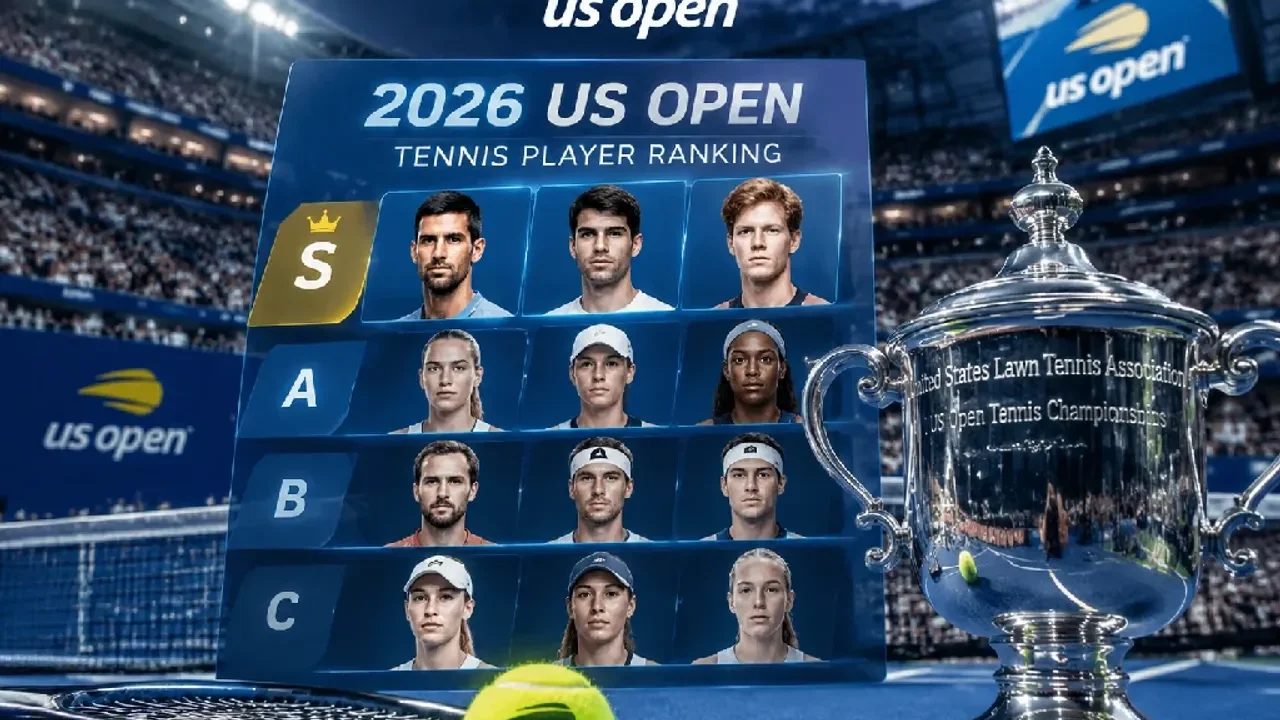
2026 美網球員排名 已預載好項目,打開後即可開始排序,同時也保有足夠彈性,方便你依自己的標準繼續調整。
注意: 此層級列表用於暫時編輯。系統模板內容可能更新;您新增的圖片和文字會自動保存在目前瀏覽器中,重新整理或再次開啟後可選擇恢復。
模板收錄內容
This set mixes established Grand Slam champions, current hard-court contenders, and younger players who could change the draw. Rank them by what matters at the US Open: serve and return quality, ability to hold up in best-of-five or best-of-three pressure, matchup flexibility, and the level they can reproduce across two weeks.
編輯核對:2026-08-11
Djokovic owns 24 Grand Slam singles titles and four US Open titles. His return depth, elastic defense, backhand control, and ability to solve long matches make him the reference point for any hard-court ranking.
官方資料Alcaraz won the 2022 US Open with explosive forehand acceleration, a dangerous drop shot, and the speed to turn defense into attack. His variety forces opponents to defend every part of the court rather than settle into a single rhythm.
官方資料Sinner's 2024 US Open title was built on early ball striking, clean two-handed backhand timing, and relentless depth from both wings. He can take time away without needing a long rally to create pressure.
官方資料Sabalenka is a two-time US Open champion whose serve and first forehand can end points before a rally develops. When her second-serve swings and return position stay under control, her power becomes difficult to contain on New York's hard court.
官方資料Swiatek's 2022 US Open run showed how her heavy topspin, wide court coverage, and punishing return game translate to a faster surface. She is most dangerous when the first two shots let her dictate with the forehand.
官方資料Gauff won her home major in 2023 by combining exceptional court speed with stubborn defense and a more reliable forehand. Her return pressure and willingness to extend points make her a difficult matchup even when the serve is not at its best.
官方資料The 2021 champion uses an unusually deep court position, flat penetrating groundstrokes, and a hard-to-read serve to disrupt conventional patterns. His five-set stamina and willingness to absorb pace have carried him through several US Open deep runs.
官方資料Zverev brings one of the tour's biggest serves and a famously stable two-handed backhand, plus enough movement to survive long hard-court exchanges. His ranking case rests on whether the forehand and second serve stay dependable in the biggest rounds.
官方資料Fritz reached the 2024 US Open final behind a heavy first serve, a flat forehand that takes the ball early, and improved resilience in extended rallies. On home soil, his ability to protect short service games can keep pressure on elite returners.
官方資料Rybakina's low, fast ball and elite first serve make her a natural hard-court threat; the 2022 Wimbledon champion can finish points with very few swings. Her placement depends on how often the first-strike game survives long return exchanges.
官方資料Pegula takes the ball early, redirects pace cleanly, and rarely gives away free points from the baseline. Her compact return and ability to change direction off both wings make her a steady hard-court benchmark even without a headline-grabbing weapon.
官方資料Andreeva already plays with unusual anticipation for her age, taking time away with early contact and disguising changes of direction. Her ranking value comes from how that court sense holds up when opponents target the serve and force her to finish points.
官方資料De Minaur turns speed into a real attacking tool: he retrieves wide balls, changes direction early, and rushes opponents with compact counterpunches. Hard courts reward that defense-to-offense transition, while his ability to finish at the net remains the swing factor.
官方資料Rublev's inside-out forehand and heavy first strike can overwhelm a court in a few shots, especially when he gets the return into the middle of the racket. The key question is whether his second serve and emotional reset survive tight late-set situations.
官方資料Ruud's heavy forehand, high-margin rally patterns, and improved hard-court comfort took him to the 2022 US Open final. His kick serve opens the court, but the ranking debate turns on whether he can attack short balls before rallies become too passive.
官方資料Draper's left-handed serve, flat forehand, and long reach make his first-strike tennis uncomfortable for opponents. The 2024 US Open semifinalist is most convincing when he keeps the ball low and uses his athleticism to turn defense into a short swing.
官方資料Shelton can flip a match with a lefty serve that reaches the corners and a forehand that accelerates abruptly. His athletic recovery and willingness to attack the net create a high ceiling, while point construction between explosive shots is still the separator.
官方資料Paul combines quick feet with a loose, varied forehand and enough touch to finish at the net. He is difficult to pin in one corner, and his ranking rises when he turns that movement into a proactive first ball instead of defending indefinitely.
官方資料Paolini's compact swings, explosive court coverage, and fearless return position let her redirect pace from either side. Her 2024 breakthrough on the biggest stages showed that height is not a barrier when she controls the first three shots.
官方資料Keys plays one of the cleanest first-strike games in the draw: a fast serve followed by a flat forehand that can take the racket out of an opponent's hand. The 2017 US Open finalist is at her best when she accepts the risk without letting rushed errors snowball.
官方資料Fonseca hits through the court with a fast forehand and a clean one-two pattern off the serve. His rise is built on taking the ball early and playing forward, so the US Open test is whether his shot tolerance and second-serve decisions match the occasion.
官方資料Fils brings heavy acceleration on the forehand and enough foot speed to counterpunch before stepping inside the baseline. His ceiling is obvious when the serve earns short replies; the next step is sustaining that aggression through a full hard-court week.
官方資料Mensik's tall frame produces a heavy serve and a penetrating backhand that can hold the middle of the court. He is still learning to protect second-serve points and manage long matches, but the ball speed already gives him a credible upset route.
官方資料Navarro uses early contact, compact changes of direction, and relentless retrieval to make opponents hit one extra ball. Her 2024 US Open semifinal run showed how effectively that low-error structure can frustrate bigger hitters.
官方資料Anisimova takes the ball early with a compact two-handed backhand and a flat forehand that redirects pace down the line. Her best tennis compresses rallies immediately; consistency and the physical demands of a deep draw decide how high she belongs.
官方資料Osaka is a four-time Grand Slam champion with two US Open titles, built around a precise first serve and a flat return that punishes short second balls. Her hard-court ranking depends on recovering the point-to-point rhythm that made her so difficult to rush.
官方資料Raducanu won the 2021 US Open without dropping a set, using clean ball striking, quick movement, and fearless returns through qualifying and the main draw. Her current case is about making that first-strike clarity and physical availability repeatable.
官方資料Mboko is an emerging power player whose acceleration and athletic coverage can turn neutral balls into attacking positions. The ranking is a projection as much as a résumé: her serve patterns, recovery between rounds, and response to experienced opponents will define the ceiling.
官方資料Tiafoe's athletic defense, explosive forehand, and improvisational touch helped him reach the 2022 US Open semifinals. A packed New York crowd can amplify his serving and shot-making, but the ranking turns on sustaining focus after the first burst of energy.
官方資料Wawrinka's one-handed backhand and fearless down-the-line hitting powered him to the 2016 US Open title and three major championships overall. Even late in his career, his ceiling rises when he can shorten points with the backhand and step into a first serve.
官方資料2026 美網球員排名 已預載好項目,打開後即可開始排序,同時也保有足夠彈性,方便你依自己的標準繼續調整。
體育
為 2026 年加勒比板球超級聯賽的七支球隊排名。比較 Antigua & Barbuda Falcons、Barbados Tridents、Guyana Amazon Warriors、Jamaica Kingsmen、Saint Lucia Kings、St Kitts & Nevis Patriots 和 Trinbago Knight Riders 的狀態、陣容強度或奪冠潛力。
預載 7 個項目
體育
為 2026 年世界盃球星排名,可比較技術、狀態、影響力、賽事期待或個人喜好。
預載 17 個項目
體育
為 2026 年世界盃國家隊排名,可比較陣容實力、狀態、戰術水準、賽事前景或個人支持度。
預載 48 個項目
體育
為 2026 年 WorldSBK 廠隊排名,可比較車手、賽車、比賽速度、團隊執行或爭冠潛力。
預載 7 個項目