Technology
Air Conditioner Ranking Tier List Template
Rank air conditioner brands by cooling performance, efficiency, reliability, noise, service, value, or personal experience.
14 preloaded items
Technology
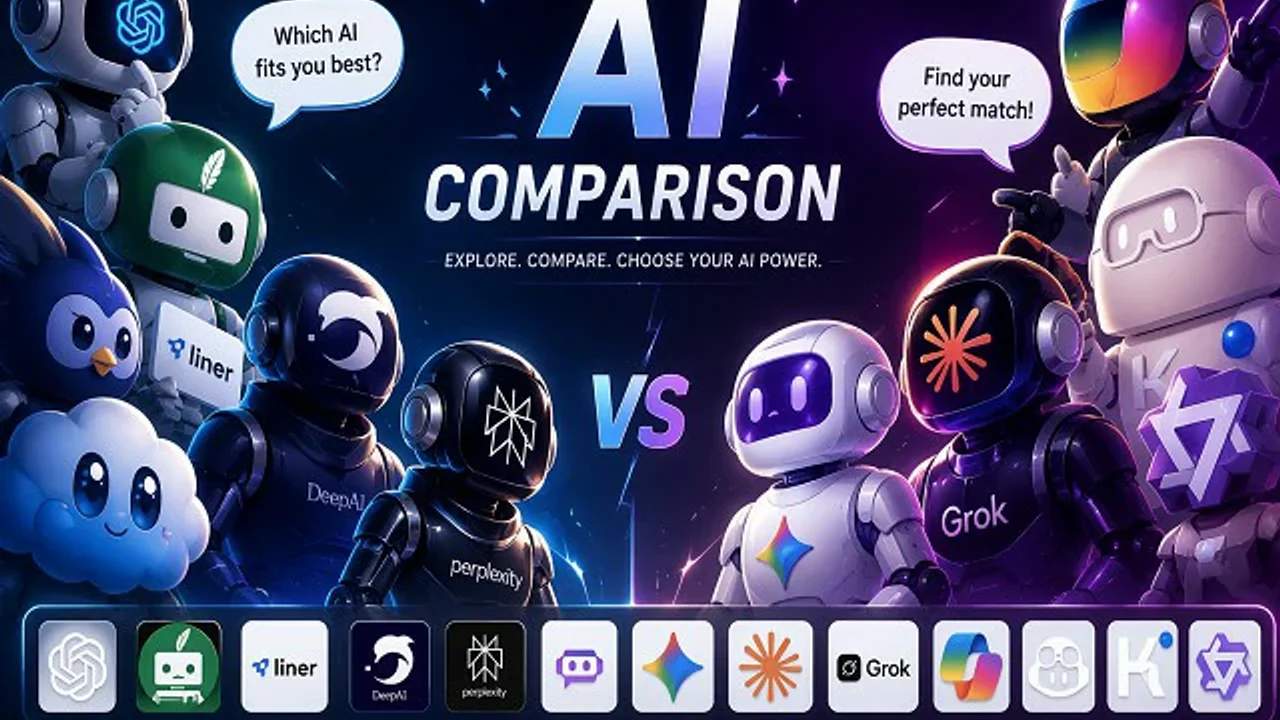
Rank popular AI software and tools by output quality, usefulness, ease of use, features, value, or workflow fit.
AI Software Ranking comes with preloaded items so you can begin ranking immediately, but the board is still flexible enough to reflect your own criteria.
Note: This tier list is for temporary editing. The system template may update, while images and text you add are saved in this browser and can be restored after a refresh or when you reopen the page.
Inside the template
Rank popular AI software and tools by output quality, usefulness, ease of use, features, value, or workflow fit. A useful ranking separates first impressions from the strengths that hold up over time, so place what you genuinely know rather than reputation alone.
Editorial review: 2026-07-24
ChatGPT is a general-purpose AI assistant that combines web research, multimodal analysis, data work, coding, image creation, and voice interaction in one product. Its broad toolset and developer ecosystem make it useful for both everyday questions and complex knowledge work.
Official sourceQuillBot is an AI writing platform built around paraphrasing, grammar correction, summarization, translation, and citation tools. It is especially practical for students and English-language writers who want to improve existing prose, rather than replace research or open-ended reasoning.
Official sourceLINER is an AI research assistant that grew out of a web-highlighting and knowledge-saving service. It helps users search, summarize, and cite information from webpages, papers, and PDFs, making it most useful for evidence-based study and personal knowledge management.
Official sourceDeepAI offers accessible web tools and APIs for text generation, image generation, and basic image editing. Its strength is a low barrier to experimentation and lightweight integration, while frontier-level model quality and advanced creative control are not its main selling points.
Official sourcePerplexity is an AI answer engine that combines live web search with concise responses and visible source citations. It helped popularize citation-first generative search and works well for rapid research, although users still need to verify whether each citation supports the claim attached to it.
Official sourcePoe is Quora's multi-model AI platform, giving users one interface for assistants from several providers as well as community-created bots. It is useful for comparing models and publishing custom experiences, with access shaped by subscription tiers and compute-point limits.
Official sourceGoogle Gemini is a multimodal AI assistant powered by Google DeepMind models, with particular strengths in long-context work, media understanding, and search-connected answers. Deep integration with Android, Gmail, Docs, Drive, and other Google services makes it especially valuable inside Google-centric workflows.
Official sourceClaude is Anthropic's AI assistant, known for long-document analysis, natural writing, code understanding, and large context windows. Artifacts and Claude Code extend it from conversation into product creation and software engineering, while clear communication and careful behavior remain central to its identity.
Official sourceGrok is xAI's general-purpose assistant, closely integrated with real-time public content from X and designed with a more direct conversational style. It covers search, reasoning, coding, and multimodal tasks, but the noise of social-media sources makes verification particularly important.
Official sourceMicrosoft Copilot brings generative AI into Windows, the web, and Microsoft 365. Enterprise editions can work with authorized email, documents, meetings, and organizational data, so its defining advantage is integration with established office software and business permissions rather than a standalone chatbot.
Official sourceBLACKBOX.AI is a developer-focused coding assistant with code generation, repository chat, autocomplete, debugging, and multi-model access across web, IDE, and terminal workflows. It can accelerate code discovery and prototyping, but architecture, security, and license decisions still require developer review.
Official sourcePi (Inflection AI) is a personal AI companion designed for warm, continuous, and empathetic conversation rather than office automation. Its natural voice experience works well for reflection and everyday support, while research, tool use, and software development are secondary capabilities.
Official sourceQwen is Alibaba's AI model family, spanning language, coding, vision, and audio with open-weight releases from compact on-device models to large systems. Strong Chinese-language performance, broad developer adoption, and deployment through Alibaba Cloud are central advantages.
Official sourceDoubao is ByteDance's consumer AI assistant for Chinese-language chat, writing, search, images, and voice. ByteDance's mobile-product expertise helped it reach a large audience quickly, while Volcano Engine offers the underlying model family to businesses at competitive cost.
Official sourceDeepSeek gained global attention through efficient training, open-weight releases, and low-cost APIs, with reasoning and coding models that compete well above their resource profile. It is highly attractive for developer deployment and research, although its consumer-product ecosystem remains relatively focused.
Official sourceAI Software Ranking comes with preloaded items so you can begin ranking immediately, but the board is still flexible enough to reflect your own criteria.
Technology
Rank air conditioner brands by cooling performance, efficiency, reliability, noise, service, value, or personal experience.
14 preloaded items
Technology
Rank car brands by design, performance, reliability, technology, comfort, value, or your personal ownership experience.
52 preloaded items
Technology
Rank electric vehicle brands by range, charging, software, performance, design, reliability, value, or ownership appeal.
15 preloaded items
Technology
Compare foldable phones by overall power, flagship potential, durability, camera capability, battery performance, software experience, and form-factor appeal. Rank established devices alongside upcoming, rumored, or concept entries according to the standards that matter most to you.
16 preloaded items